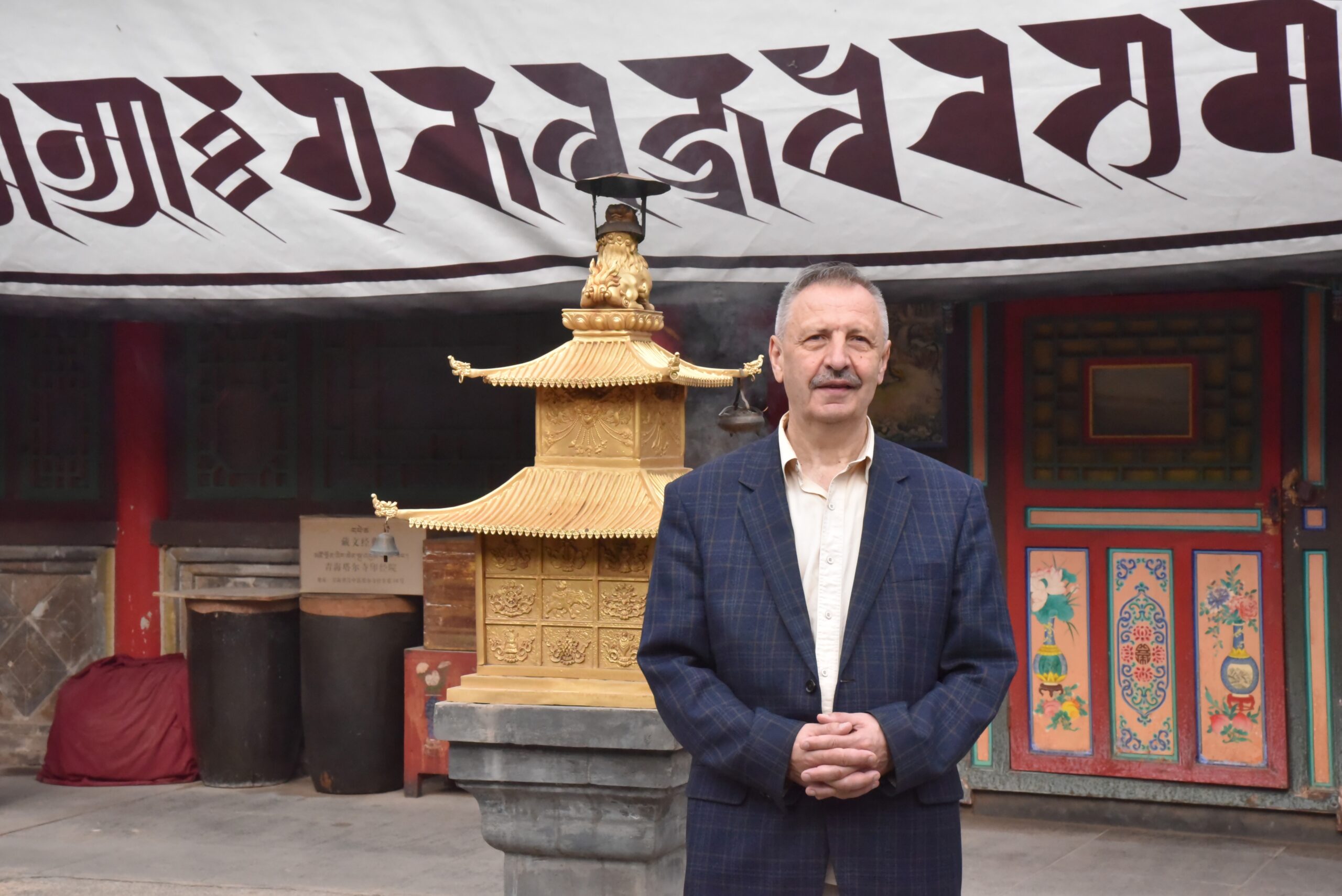
In Memoriam: Professor Vladimir Uspensky (1954–2025)

Written by Alexander Zorin

On 28 December 2025, Professor Vladimir Uspensky passed away in Saint Petersburg, having turned seventy-one in the hospital. I was aware that he had been facing serious health problems related to cancer; nevertheless, his death came as a great shock. He always wrote about his condition with remarkable calm, and I believed it to be under control. We exchanged messages just a few days before his heart stopped, and I could not imagine that this would be the last time I would hear from him.   

As recently as April of 2025, Anna Turanskaya, Alla Sizova, and I published an article in the Revue d’Études Tibétaines celebrating the jubilees of Vladimir Leonidovich—as we called him in Russian, following the traditional use of patronymics—and his friend, Professor Anna Tsendina. That article contains all the major information on Uspensky’s academic career and bibliography; there is therefore little sense in repeating it here. Instead, I will highlight only some of the main episodes and achievements, adding a few personal notes.

Uspensky studied Mongolian and Tibetan at Leningrad State University from 1975 to 1981. At that time, Bronislav Kuznetsov (1931–1985) was the only professor of Tibetan in the USSR. The photograph below shows Kuznetsov surrounded by his many students and younger colleagues, including Uspensky (fourth from the right, with a moustache and a tie). I received this photograph from Vladimir Uspensky in April 2020, while I was working on a book about the history of Tibetan studies in Russia. Uspensky supported my work greatly, providing several important details related to both well-known and virtually unknown figures.
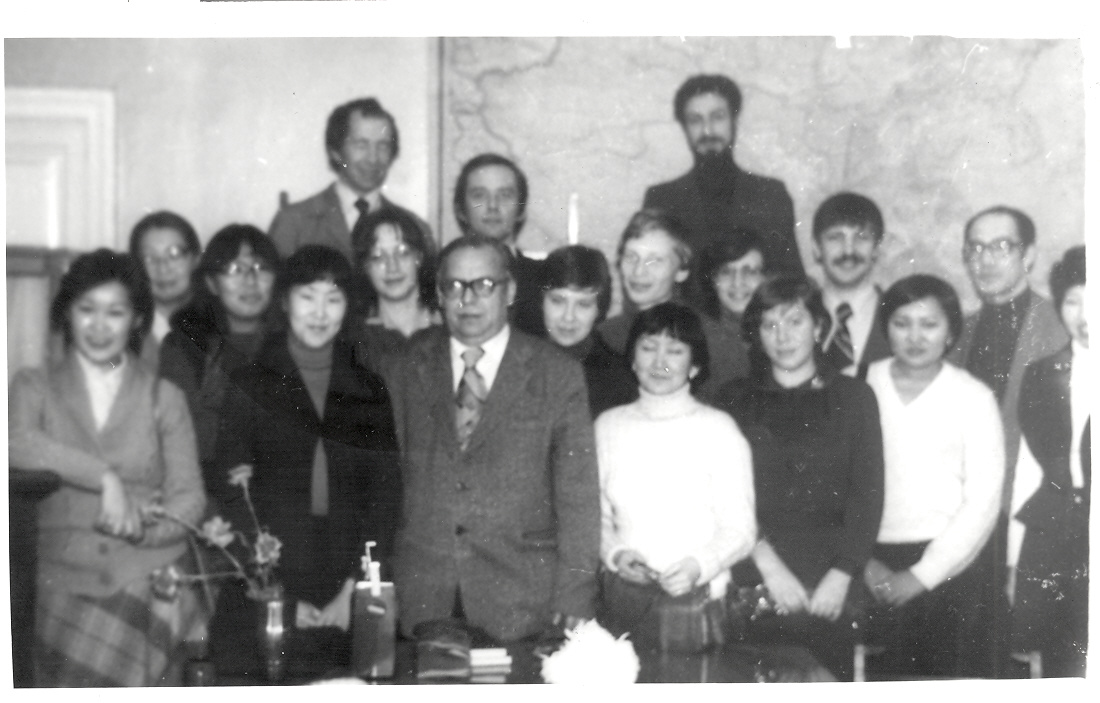
Bronislav Kuznetsov and his students celebrating his 50th anniversary (Leningrad, 1981).
Bronislav Kuznetsov and his students celebrating his 50th anniversary (Leningrad, 1981). 

In the same year that this photograph was taken, Uspensky graduated from the university and entered the doctoral program at the Leningrad Branch of the Institute of Oriental Studies of the USSR Academy of Sciences (now the Institute of Oriental Manuscripts, Russian Academy of Sciences – IOM RAS). A passionate lover of old Tibetan and Mongolian books, he always wished to work with the admirable collection of Tibetan manuscripts and block prints preserved at this institute. He was a member of a joint project with the Asian Classics Input Project (ACIP) aimed at cataloguing this collection. From 1992 to 1996, and again from 2002 to 2005, he coordinated, along with Dr. Lev Savitsky (1932–2007), the work of a group of Tibetans from Sera Mey Monastery (Karnataka, India) at the Institute.
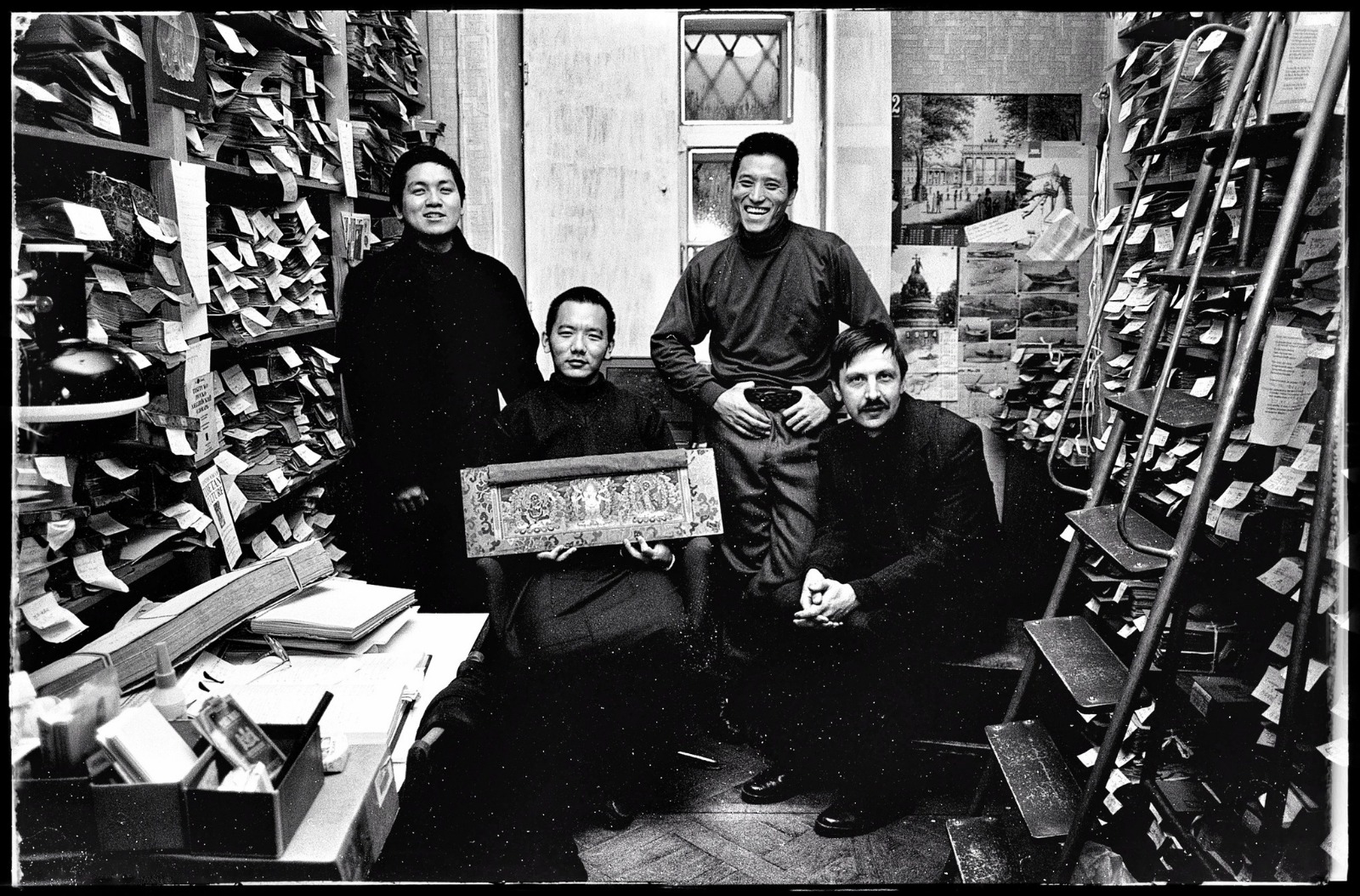
Jampa Namdol, Geshe Thubten Phelgye, Ngawang Kheatsun, and Vladimir Uspensky at the Tibetan Collection of the St Petersburg Branch of the Institute of Oriental Studies, RAS (now IOM RAS). Photograph by Svetlana Shevelchinskaya, 1994. Courtesy of the author.

Between these two periods, he was a visiting professor in Japan at Tokyo University of Foreign Studies (1996–1997), an experience he always recalled with great warmth, and then he worked intensively on cataloguing the significant collection of Mongolian manuscripts and block prints at Saint Petersburg State University. He was the first to identify and describe the collection of books brought by Vasily Vasilyev (1818–1900) from Beijing to Kazan and then to St Petersburg. Some of these books, as Uspensky ascertained, belonged to the Manchu Prince Yunli (1697–1738), to whom Uspensky dedicated a special monograph (1997).

The discovery of the Vasilyev collection was especially meaningful for Uspensky. As he himself wrote in one of his emails to me (from 29 January 2024; the English translation is mine): “Academician Vasilyev became my idol in my second year at university, when I came across his book, Buddhism. Of course, I understood very little, but I grasped the main point: a scholar of the East must work from sources in Eastern languages”. Uspensky made significant contributions to the history of 19th– and early 20th-century Russian Tibetology and Mongolian studies, which were closely connected to Kazan: many outstanding scholars were born there or nearby, or worked in the city. Tatarstan was also important to him because his wife, the Indologist Elena Uspenskaya (1957–2015), belonged to a subethnic group of Kryashens, sometimes referred to as Baptized Tatars. After her sudden death, she was buried in her native town, Yelabuga (Tatar: Alabuğa), and Uspensky often traveled there to visit her grave. In October 2025, he did so for the last time.

In the same email quoted above, he wrote about another trip: “I visited several places associated with Russian Orientalists: Archimandrite Palladius (Kafarov) and Academician Vasiliev. <…> I look rather worn out, but please judge me leniently—two sleepless nights. The point is not about me, but that this is Kainki, the estate that Vasiliev received as his wife’s dowry. Within the enclosure of this church, he was buried next to his wife. I could not discern any traces of their graves. My sorrowful gaze is directed toward the place where our great predecessor is buried”.
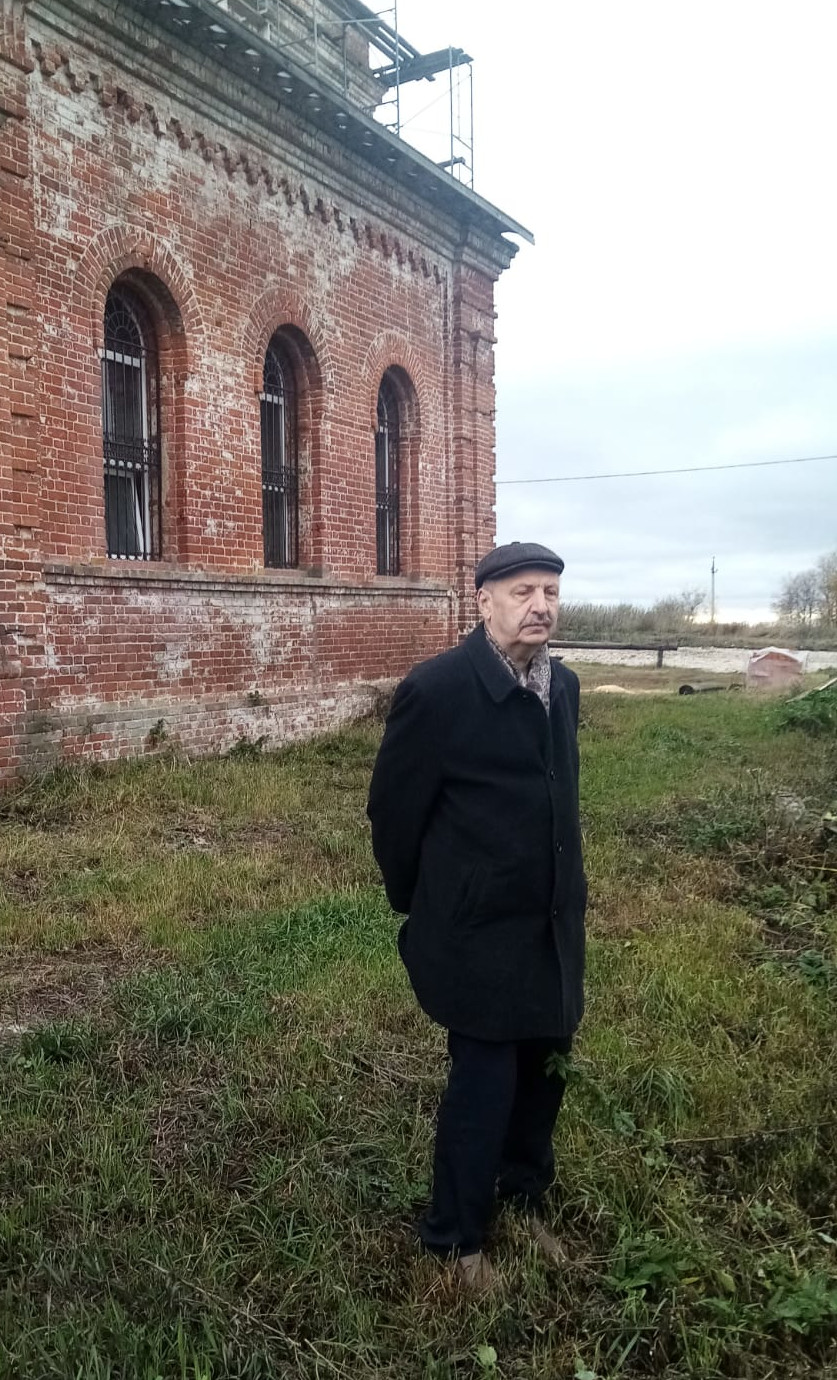
Vladimir Uspensky in Kainki, a village 40 km from Kazan, near the grave of Vasily Vasilyev and the Church of the Exaltation of the Holy Cross (built 1890–1903; ruined during the Soviet period, now under reconstruction). October 2023.

I do not know whether Uspensky adhered to any particular religion. He always spoke about all religious traditions with respect, and he certainly felt particularly close to Orthodox Christianity and Tibetan Buddhism, yet he described himself as a positivist whose worldview was grounded in science. Still, he believed in certain subtle connections that tie people together. When he learned that the date of my birth coincided with the date of his expulsion from the IOM’s Tibetan collection in 2005, he seemed to be convinced it was more than mere coincidence. This is not the place or time to recount in detail his brief tenure as a full-fledged curator of the collection. It suffices to say that the abrupt end of that period was among the saddest days of his life. Later, when I myself became the former curator of this collection, he told me that he had always declined my invitations to visit it, because it is too painful for people to return to a place they loved.
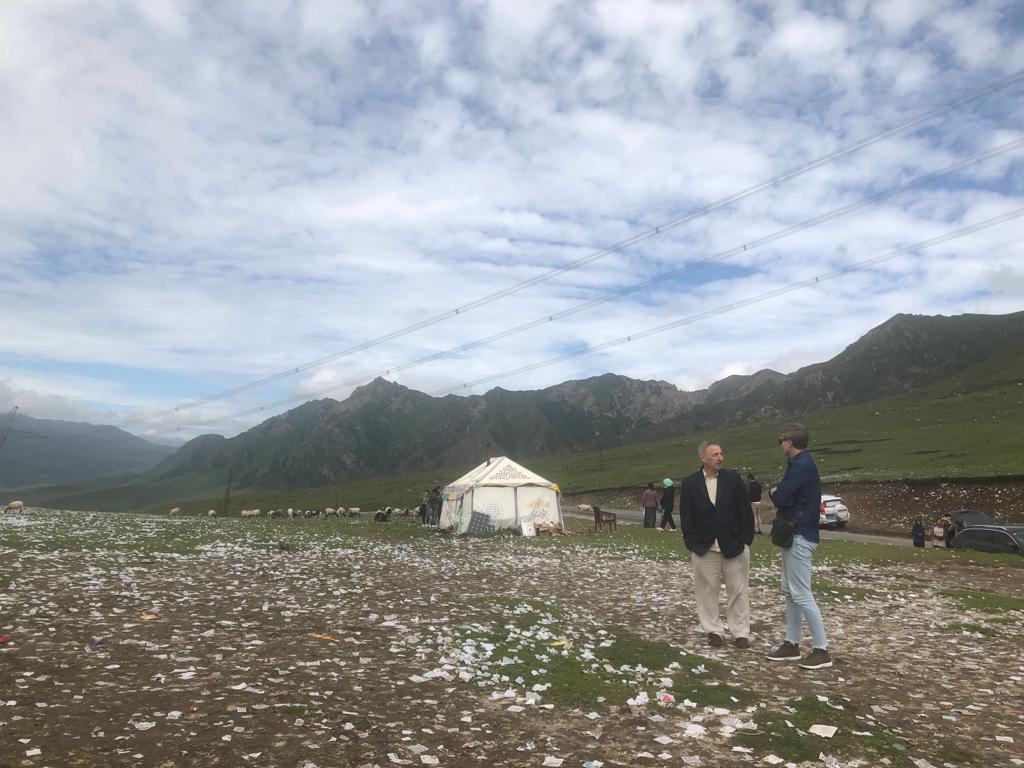
Two members of the club of ex-curators of the IOM’s Tibetan collection. Qinghai, August 2023. The photograph was taken by Dr. Diana Cousens, Uspensky’s friend and editor since the IATS meeting in Graz in 1995. Courtesy of the author.

After he began working at Saint Petersburg University in 2007, he developed a new interest in supporting promising students. To his deep regret, however, they eventually all chose to leave the field of Tibetology for more practical pursuits. Nevertheless, he endeavored to introduce new students to Tibetan Buddhist culture, taking them to the historic Saint Petersburg Buddhist Temple Gunzechoinei, with whose abbot, Buda Badmayev (Jampa Donyed Lama), he maintained a friendly relationship.

It is very unfortunate that his major Russian-language monograph, Tibetan Buddhism in Beijing (2011), remains untranslated into English. In this book, Uspensky summarized many years of research on the flourishing of Tibetan Buddhism in China’s capital during the Manchu Qing dynasty. He explored a wide range of topics, including the lamas of Beijing and their high-ranking patrons, Buddhist temples, the printing of religious texts, and the creation of religious art objects. I know that he had planned to prepare a second revised edition in Russian. Sadly, that will never happen.
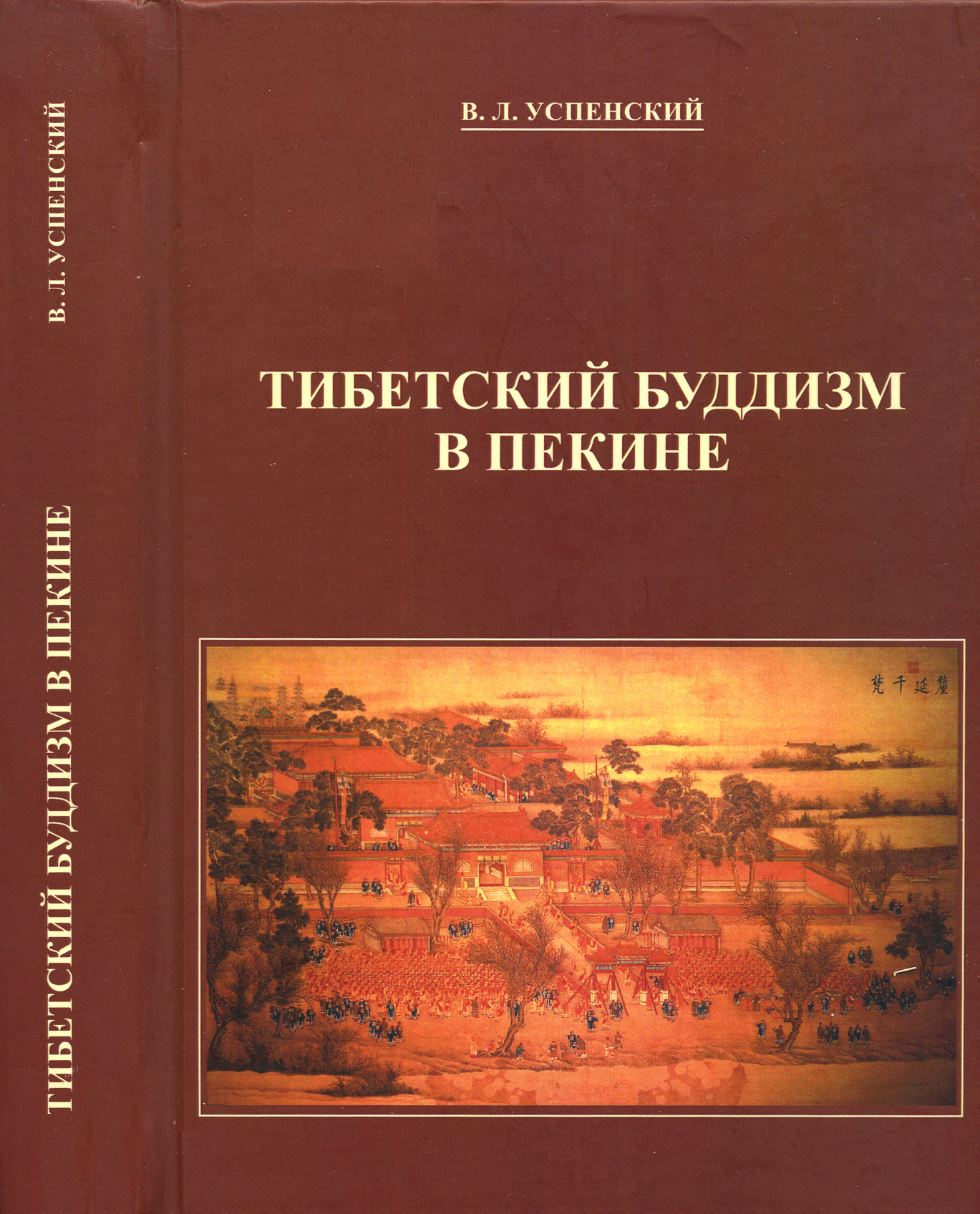
The cover of Vladimir Uspensky’s book Tibetan Buddhism in Beijing (2011).

I have many fond and grateful memories of our relationship, beginning in August 2008 when we traveled together, in a large group of scholars, to Lhasa—for both of us, it was the first opportunity to visit Tibet. I am especially grateful to him for the moral support he extended to me when I found myself in emigration in 2022. He even wrote a review of my Habilitation dissertation in 2025—not every colleague in Russia would have had the courage to do so in the current historical context.

Difficult times, like ours, reveal people’s true character. Vladimir Uspensky was a free and decent person, apart from being a great scholar. I will miss him deeply.
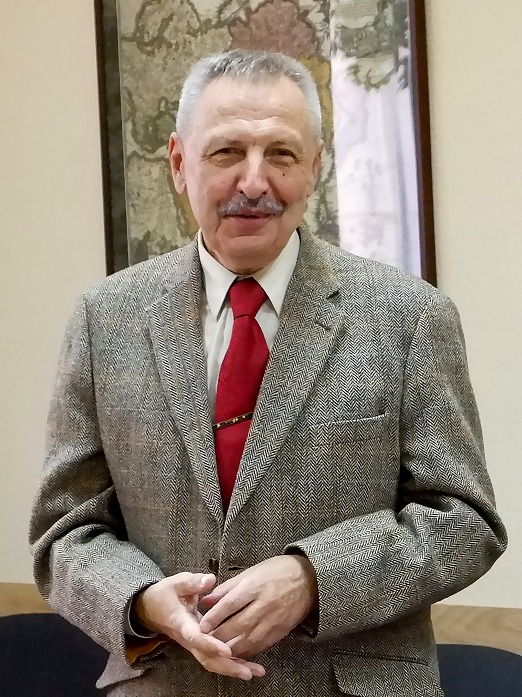
Prof. Vladimir Uspensky at the conference dedicated to the 70th anniversary of Anna Tsendina (October 7–8, 2024, Moscow, HSE University). Photo by Yana Leman.
P.S. An interview with Vladimir Uspensky, conducted by Anna Sehnalová in 2018, is available on the ‘Oral History in Tibetan Studies’ website.
 
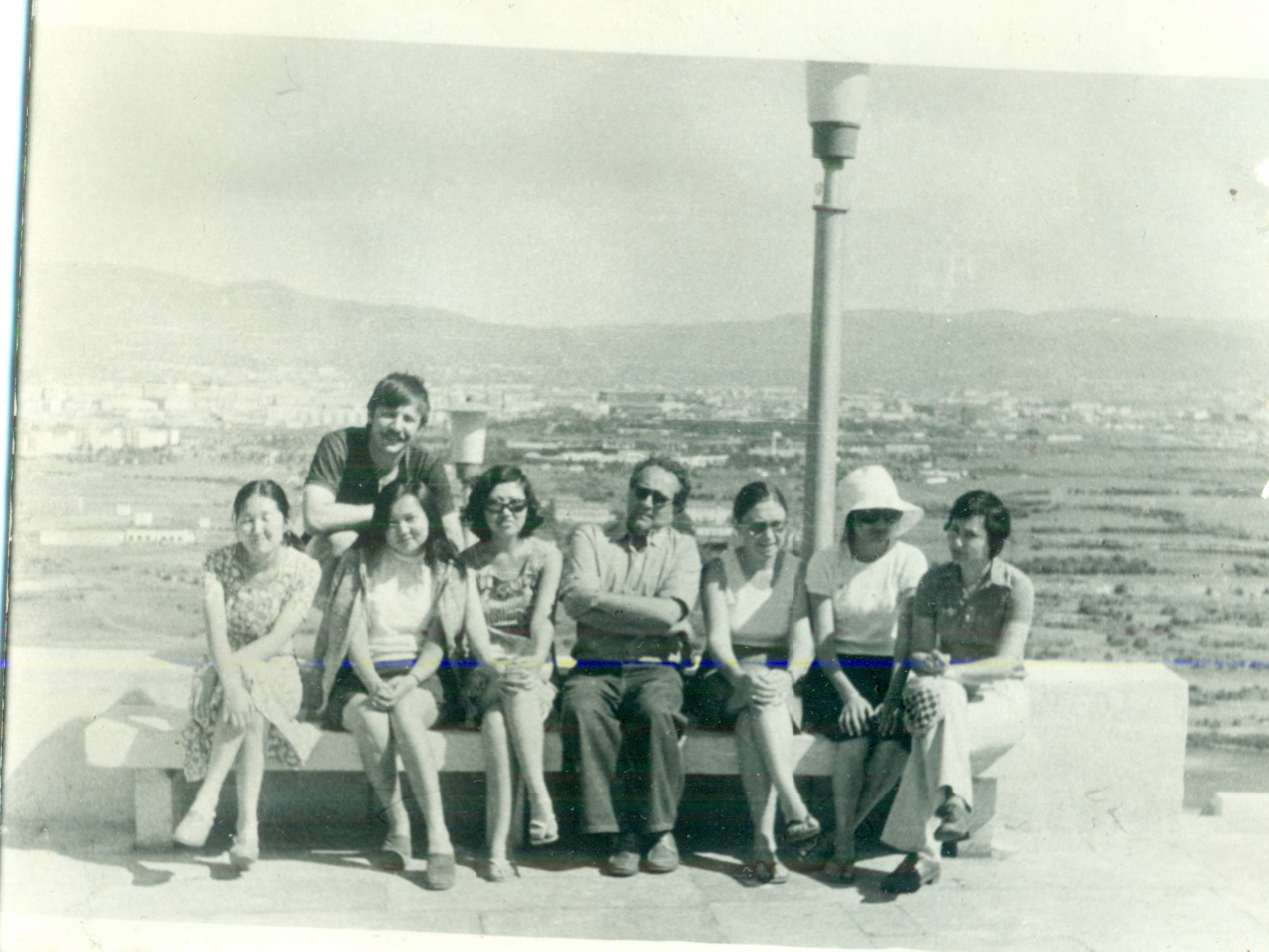
Vladimir Uspensky with friends in Ulanbaatar, 1977. Courtesy of Diana Cousens.
Vladimir Uspensky at the Kumbum Monastery in Amdo, August 2023. Photo by Diana Cousens.

In Memoriam: Shannon Mary Ward (1990–2025)

by Camille Simon

It is with great sadness that we learned of the passing of Shannon Ward on 9th September 2025. Her work as a linguistic anthropologist provides precious insights into multilingual socialization, at a time when the issue of language transmission is a pressing concern among Tibetan communities both in Tibet and in the diaspora.

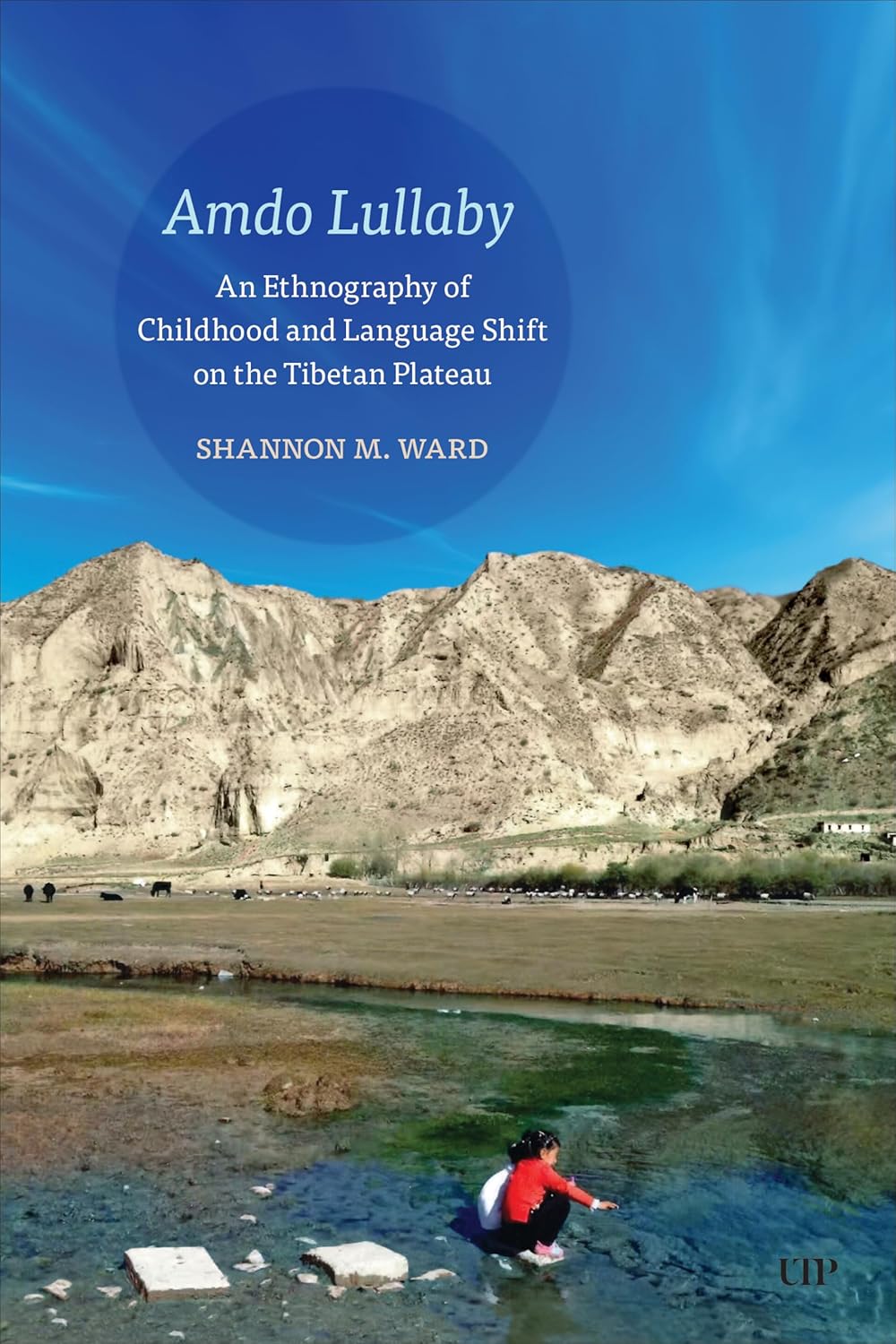
Immediately after completing her PhD entitled “Learning Language, Transforming Knowledge: Language Socialization in Amdo, Tibet” in 2019 (published as Amdo Lullaby: An Ethnography of Childhood and Language Shift on the Tibetan Plateau, University of Toronto Press, 2024), she took up a position of Assistant Professor in Linguistic Anthropology at the University of British Columbia Okanagan. Her paper “Style and Standardization: A Case Study of Tibetan Family Interaction in Greater New York” (2015) paved the way for the study of language transmission and language shift among the Tibetan diaspora outside South Asia. From 2020 on, she further engaged in deepening our understanding of Tibetan as a heritage language in the West, with research projects on the preservation of Tibetan language in Canada and a study of linguistic interactions during mealtimes among Tibetan-Canadian families.

I have been in intermittent contact with Shannon since the summer of 2017, when we first met in Xining, and I was particularly pleased to hear her talk about her research on language socialization and acquisition in Amdo. Language acquisition is a field dominated by research on a restricted array of dominant languages, mainly spoken in Western societies. Shannon’s careful documentation of language acquisition and socialization among minoritized families in the multilingual context of Amdo thus represents a much-needed contribution to this field. Furthermore, her analysis of the dynamics of language shift in the current political context in Amdo and the role and place of children in this process also provides an invaluable insight into the situation. Over time, I have increasingly learned to admire Shannon’s precise and thorough analyses of linguistic phenomena and everyday interactions, always based on intensive fieldwork and a deep familiarity with the people she worked with. Such scientifically impressive results were only permitted by her in-depth knowledge of Tibetic languages.

With the untimely death of Shannon Ward, we not only lose a brilliant scholar but also an enthusiastic and dedicated colleague. Her genuine interest in converting her research findings into practical tools for the Tibetan communities can be illustrated, for example, by the workshop on Tibetan Heritage Language Education she organized in May 2024 with the Tibetan community in Vancouver. I cannot claim to have known Shannon very well on a personal level, but our exchanges were always full of prospects for new ideas and projects, and I deeply regret that we did not have time to collaborate more.

Details on Shannon Ward’s research projects can be found here. An interview about her book Amdo Lullaby can be found here.

In Memoriam: Michael Ium (1984–2025)

Written by Birgit Kellner, Pascale Hugon and Reinier Langelaar, with support of Anne MacDonald.

We are deeply saddened to announce that our colleague and friend, Michael Hee Ium, passed away at Vienna’s General Hospital on April 9, 2025, after a sudden onset of severe illness. Michael joined the Austrian Academy of Sciences in January 2025. He worked at the Institute for the Cultural and Intellectual History of Asia (IKGA) as a Postdoctoral Fellow within the project “TibSchol: The dawn of Tibetan Buddhist scholasticism (11th–13th c.).” We felt very fortunate to have him as a member of our Institute, even if his stay with us was cut short, and far too brief.

Born and raised in Toronto as the son of South Korean immigrants, Michael completed degrees at the University of Toronto (BSc Psychology), Maitripa College (MA Buddhist Studies), and the University of California, Santa Barbara, in the Department of Religious Studies (MA, PhD 2023, Religious Studies), where he also began to gain teaching experience. After having earned his PhD, he was a Postdoctoral Fellow at the University of Toronto’s Department for the Study of Religion and the Robert H.N. Ho Family Foundation Centre for Buddhist Studies. He subsequently taught at the University of Toronto, Mississauga’s Department of Historical Studies.

A textualist and historian of religion, his research focused on the religions of Tibet and South Asia, and in particular, on the early history of Ganden Monastery and the construction of the Geluk tradition in Tibet, which was the subject of his dissertation. Although the Geluk tradition is largely regarded as a monastic and scholastic tradition, Michael’s research emphasized the importance of understudied aspects of the tradition, such as mahāsiddhas, oracular prophecy, and pilgrimage, for its growth and development. His 2022 article “Tsongkhapa as a mahāsiddha: A Reevaluation of the Patronage of the Gelukpa in Tibet” (Journal of the International Association of Buddhist Studies 45, 73-117) provides a glimpse of his intellectual brilliance and his nuanced approach to Tibetan religious history. Michael also served as co-editor for the Canadian Journal of Buddhist Studies (CJBS, https://thecjbs.org/).

During his short period at the IKGA and as a member of the TibSchol project, we swiftly came to appreciate Michael not only for his insightful scholarship, deep intellectual curiosity and enthusiasm, but also for his warm and gentle nature, his humility and compassion. In only a few months time, Michael became a close colleague and friend to many at our Institute, as well as to colleagues and students at the University of Vienna. He was excited to embark on a new phase in his life, and the community in Vienna warmly embraced him. We all were looking forward to working with him, learning from him, and enjoying his amicable and uplifting company. His untimely passing was a shock that reverberated far beyond Vienna, however, and our thoughts are with everyone who had the pleasure of knowing him. Michael spent his final days with his beloved mother. Close colleagues and friends were by his side.

His academic accomplishments can be found in Michael’s CV.

In Memoriam: The Gyalrong Kuzhap—Professor Tsanlha Ngawang (1930–2025)

by Gyalrong Tenzin Jinpa

Professor Tsanlha Ngawang Tsültrim Yéshé Drönmé (1930–2025) passed away on February 16, 2025, at the age of 95 in a hospital in Chengdu. His passing marks the loss of a scholar whose enduring legacy will continue to shape our understanding of Tibetan culture, history, and language. Born in 1930 in Tsanlha, Gyalrong, on the eastern edge of the Tibetan Plateau, his life was deeply intertwined with the political upheavals, personal struggles, and cultural resilience that defined Tibet in the twentieth century.

Recognized as a tulku from an early age, Professor Ngawang moved to Lhasa to pursue his education in the 1940s, where he quickly established himself as a brilliant debater and one of the top students at Drepung Loserling College. However, disillusioned by the political dynamics within the monastic community and the Lhasa aristocracy, he returned to Gyalrong in 1948, determined to chart a path of his own. In the 1950s, captivated by the promises of justice and equality offered by the Chinese Communist Party, he became involved in their United Front efforts. Yet, the chaos of the Cultural Revolution and the political upheavals that followed led him to reassess his path, turning his focus instead to the preservation of Tibetan culture and heritage, a mission he would carry for the rest of his life.

Under the mentorship of Tibet’s foremost scholars, Mugé Samten and Dungkar Lozang Trinlé, and with the encouragement and inspiration of his classmate Döndrup Gyel — an exceptionally innovative modern Tibetan writer and intellectual of his era — Professor Ngawang emerged as a leading figure in Tibetan studies. Among his many contributions, The Dictionary of Classical Tibetan (1997, 2023) remains a cornerstone of Tibetan language scholarship, an indispensable resource for scholars and students alike. Yet his work transcended lexicography. Driven by an unwavering commitment to preserving the cultural legacy of Gyalrong, he devoted himself to documenting its history, unearthing lost archives, and revitalizing the cultural memory of his homeland. His monumental achievement, the Gyalrong Tibetan History and Culture Series (2017), a 10-volume collection published by Sichuan Minzu Press, ensured that Gyalrong’s rich history would never be lost to time.

In his memoir, The Beggar Lama: The Life of the Gyalrong Kuzhap (2023), Professor Ngawang offered a deeply personal account of his life, navigating the complex intersections of religion, politics, and scholarship. His reflections also found their way into other works, including Small Peoples, Big Histories: Speaking from China’s Margins, a new book project by Tenzin Jinba. This work delves into the deep-rooted issues within Tibetan society—regional and religious divides, and the evolving role of Tibetan Buddhism in the modern world. For instance, Professor Ngawang endured ridicule from the Gelug establishment, who labeled him a “Bönpo lama” for his engagement with Bön history and materials. He saw these internal divisions within Tibetan society as shadows—tumors—that needed urgent self-reflection. He believed that only through such self-critique could Tibetan identity and culture thrive.

Despite the many challenges and disappointments he faced, Professor Ngawang remained steadfast in his belief in the future of Tibetan culture and religions. At times, he expressed a longing for a place where Tibetan spiritual traditions remained intact, even suggesting that he would rather be reborn in Bhutan. Yet he never wavered in his conviction that Tibetan traditions had a vital role to play in the future of humanity, offering profound wisdom and guidance to a world in desperate need. A man of profound contrasts—critical yet hopeful, disillusioned yet unwaveringly dedicated to preserving Tibetan heritage—his legacy will resonate for generations to come.

Professor Ngawang’s life was a testament to resilience, intellectual rigor, and an unyielding commitment to the survival of Tibetan culture. As a tulku, scholar, revolutionary, and above all, a guardian of Tibetan heritage, he faced enormous challenges yet remained undeterred in his efforts to preserve the Tibetan language, history, and traditions. His tireless work, scholarly contributions, and enduring spirit have left an indelible mark. His memory will continue to inspire future generations, and his legacy will live on in the hearts of all those who share in the struggle to protect cultural identities in an ever-changing world.

Selected works

Btsan lha Ngag dbang Tshul khrims. 1997. Brda dkrol gser gyi me long/Guzangwen cidian 古藏文辭典 [The Dictionary of Classical Tibetan]. Beijing: Minzu Chubanshe; updated edition, 2023.

———. 2009. A Lexicon of the Rgyalrong Btsanlha Dialect: Rgyalrong-Chinese-Tibetan-English. Osaka: National Museum of Ethnology.

———, ed. 2020. Rgyal rong yul skad zhib ‘jug/Zangyu Jiarong Fangyan 藏語嘉絨方言研究 [Research on the Tibetan Gyalrong Dialect]. Chengdu: Sichuan Minzu Chubanshe.

Seng ge ‘bum, Btsan lha Ngag dbang Tshul khrims, Tsheng dbang, Bstan ’dzin sbyin pa, and Nam mkha’ tshul khrims, eds. 2017. Shar rgyal mo tsha ba rong gi lo rgyus dang rig gnas dpe tshogs/Jiarong Zangzu Lishi Wenhua Congshu 嘉絨藏族歷史文化叢書 [Gyalrong Tibetan History and Culture Series]. Chengdu: Sichuan Minzu Chubanshe.


Second announcement of the 17th Seminar of the International Association for Tibetan Studies

We have the pleasure to announce that the 17th International Association for Tibetan Studies (IATS) Seminar will be arranged in 2026 by the Himalaya Centre for Asian Studies (HiCAS), Kathmandu University (Nepal), under the auspices of the IATS. Professor Sagar Sharma (HiCAS) has accepted the appointment as the Chair (Convener) of the seminar.

The Seminar will take place in Kathmandu on 23-29 August 2026.

We hope many of you will be able to attend the seminar which will take place in Asia.

Yours sincerely,

Françoise Robin, Acting President IATS,

Ulrike Roesler, Acting Secretary General IATS


སྤྱི་ལོ་༢༠༢༦་ལོའི་རྒྱལ་སྤྱིའི་བོད་རིག་པའི་ཞིབ་འཇུག་ཚོགས་པའི་ཚོགས་འདུ་ཐེངས་བཅུ་བདུན་པའི་སྐོར་གྱི་གསལ་བསྒྲགས། ང་ཚོས་སྤྲོ་སེམས་དང་བཅས་གསལ་བསྒྲགས་བྱ་རྒྱུ་ནི། རྒྱལ་སྤྱིའི་བོད་རིག་པའི་ཞིབ་འཇུག་ཚོགས་པའི་ཚོགས་འདུ་ཐེངས་བཅུ་བདུན་པ་སྤྱི་ལོ་༢༠༢༦་ལོར་བལ་ཡུལ་དུ་འཚོགས་རྒྱུ་རེད། རྒྱལ་སྤྱིའི་བོད་རིག་པའི་ཞིབ་འཇུག་ཚོགས་པའི་སྟངས་འཛིན་འོག་ཚོགས་འདུ་བཀོད་སྒྲིག་ཀཱ་ཋ་མཱཎྜོ་སློབ་གྲྭ་ཆེན་མོའི་ཧི་མ་ལའི་ཤར་གླིང་རིག་པའི་ལྟེ་གནས་ནས་བྱ་རྒྱུ་རེད། སློབ་དཔོན་ཆེན་མོ་སཱ་གར་ཤཱར་མ་ལགས་ཀྱིས་ཚོགས་འདུ་གཙོ་སྐྱོང་པའི་ཐུགས་འགན་བཞེས་ཡོད་པ་དང་། ཚོགས་འདུ་དེ་༢༠༢༦ ཟླ་༨ ཚེས་༢༣ ནས་༢༩ བར་ཀ་ཐ་མན་ཌུ་རུ་འཚོགས་རྒྱུ་རེད།

ཤར་གླིང་དུ་འཚོག་རྒྱུའི་ཚོགས་ཐེངས་འདིར་ཁྱེད་རྣམ་པ་གང་མང་ཚོགས་ཞུགས་གནང་ཐུབ་པར་ང་ཚོས་རེ་བ་བྱེད་བཞིན་ཡོད།

རྒྱལ་སྤྱིའི་བོད་རིག་པའི་ཞིབ་འཇུག་ཚོགས་པའི་ཚོགས་གཙོ་ Françoise Robin དང་། དྲུང་སྤྱི་ Ulrike Roesler གཉིས་ནས་བསམ་པ་རྣམ་དག་གིས་ཕུལ།

In Memoriam: Jeffrey Hopkins (1940–2024)

Dear colleagues,

It is with great sadness that I must inform you that Jeffrey Hopkins passed away in Vancouver (BC) overnight following complications with cancer.

Born Paul Jeffrey Hopkins in Barrington, Rhode Island in 1940, Hopkins attended Pomfret Preparatory School, following which he matriculated at Harvard University. It was there that he met his fellow student Robert Thurman, who in turn, encouraged him to pursue their mutual studies with Geshe Wangyal in Freewood Acres, New Jersey.

After four years of study with Geshe Wangyal and his community of scholars and practitioners, Hopkins matriculated at the University of Wisconsin at Madison to pursue an advanced degree in Buddhist Studies under Richard Robinson. Working closely with the former abbot of the Gomang College of Drepung Monastic University, Kensur Ngawang Lekden, as well as other learned scholars from the Tibetan tradition, Hopkins completed his PhD in 1973, “Meditation on Emptiness,” an extensive response to T.R.V. Murti’s contention that meditation in Prāsaṅgika-Mādhyamika lacked an object, a work that was eventually published by Wisdom Publications in 1983.

Hopkins’s first academic appointment was in the Religious Studies department at the University of Virginia, where he proceeded to build what would become the premier program of studies in Tibetan Buddhism in the Western hemisphere, serving as advisor to eighteen completed Ph.D. and thirty-one masters students, and where he remained throughout the rest of his academic career until his retirement in 2005.

In his personal reflections and autobiographical writings, Hopkins stated that he remembered elements of his previous life as a monk in Tibet, including the manner of his death. In addition, as a child, he maintained that he had a private language in which he thought, and from which he needed to translate into English when speaking with others. Having abandoned his internal language around the age of ten for the ease of communicating in English, it was not until he began his studies with Geshe Wangyal in the 1960s that he realized that the private internal language of his childhood was Tibetan.

Feeling a close personal connection to Tibet, throughout his career, Hopkins performed many additional roles in the larger sphere of Tibetan Buddhism, such as serving as the Dalai Lama’s official interpreter from 1976 to 1996, testifying before the U.S. congress as an expert witness on the Tibetan political situation, as well as organizing conferences and the visitations of leading Tibetan scholars to the University of Virginia for his students to study with.

He was 83 years old.

Paul Hackett

News from the IATS: autumn 2023

རྒྱལ་སྤྱིའི་བོད་རིག་པའི་ཞིབ་འཇུག་ཚོགས་པའི་སྤྱི་ལོ་༢༠༢༣ལོའི་སྟོན་ཁའི་གསལ་འགྱུར།

In October 2023, Hanna Havnevik announced her decision to step down from her role as President of the IATS due to family and health reasons. Hanna has been IATS President from 2019 until 2023. We will miss her calm and steady hand, her wisdom, and her kindness, and we are profoundly grateful for the fantastic work she has done for the IATS during her Presidency.

སྤྱི་ལོ་༢༠༢༣ལོའི་སྤྱི་ཟླ་༡༠་ལ་ Hanna Havnevik ལགས་ཀྱིས་འཕྲོད་བསྟེན་དང་ཁྱིམ་ཚང་གི་གནད་དོན་གྱི་རྐྱེན་གྱིས་རྒྱལ་སྤྱིའི་བོད་རིག་པའི་ཞིབ་འཇུག་ཚོགས་པའི་ཚོགས་གཙོའི་ལས་འཁུར་ནས་དགོངས་ཞུ་གནང་དགོས་བྱུང་པ་གསལ་བསྒྲགས་གནང་བ་རེད། ཁོང་གིས་སྤྱི་ལོ་༢༠༡༩ནས་སྤྱི་ལོ་༢༠༢༣བར་ལ་ཚོགས་གཙོའི་ཐུགས་འགན་བཞེས་པ་རེད་། ཁོང་གི་ཐུགས་གཤིས་འཇམ་ཞིང་བྱམས་བརྩེ་ལྡན་ལ་མཁྱེན་དཔྱོད་ཡངས་པའི་ཕྱག་ལས་བརྟན་པོ་གནང་ཕྱོགས་ཐད་ལ་ང་ཚོས་མིག་ལྟོས་ཡར་བལྟ་དང་བཀའ་དྲིན་སྙིང་བཅངས་ཞུ་བཞིན་ཡོད།

The Secretary General Professor Françoise Robin, INALCO, has agreed to serve as Acting President until the next elections are held. This solution is in accordance with the IATS statutes, which read as follows: “If the President for any reason is unable to act, the Secretary General shall temporarily execute the duties of the President.” Board member Professor Ulrike Roesler, University of Oxford, has agreed to serve as IATS Secretary General during the interim period and her nominaton was approved by the IATS Board. The next elections for the role of IATS President will take place at the IATS seminar in Dulikhel, Nepal in 2026.

ཚོགས་པའི་སྒྲིག་གཞིའི་ནང་དུ་གནད་དོན་གང་རུང་གིས་རྐྱེན་པས་ཚོགས་གཙོས་འགན་འཁུར་ཞུ་མ་ཐུབ་པ་བྱུང་ན་སྤྱི་ཁྱབ་དྲུང་ཆེས་གནས་སྐབས་རིང་ཚོགས་གཙོའི་འགན་འཁུར་འཁྱེར་དགོས་པ་གསལ་བ་བཞིན་ད་ལྟ་སྤྱི་ཁྱབ་དྲུང་ཆེའི་ཐུགས་འགན་བཞེས་བཞིན་པ། ཧྥ་རན་སིའི་ཤར་ཕྱོགས་སྐད་བརྡ་རིག་པའི་མཐོ་སློབ་INALCOཀྱི་དགེ་རྒན་ཆེན་མོ་Françoise Robin ལགས་ནས་ཐེངས་རྗེས་མའི་ཚོགས་གཙོའི་འོས་བསྡུ་མ་ཟིན་བར་དུ་བར་བརྒལ་ཚོགས་གཙོའི་ཐུགས་འགན་བཞེས་རྒྱུར་ཞལ་བཞེས་གནང་བ་རེད། རྒྱལ་སྤྱིའི་བོད་རིག་པའི་ཞིབ་འཇུག་ཚོགས་པའི་སློབ་སྟོན་ཚོགས་ཆུང་གི་ཚོགས་མི་ཡིན་པ Oxford མཐོ་སློབ་ཀྱི་དགེ་རྒན་ཆེན་མོ་ Ulrike Roesler ལགས་ནས་སྤྱི་ཁྱབ་དྲུང་ཆེའི་ཐུགས་འགན་བཞེས་རྒྱུར་ངོས་ལེན་བྱས་པ་དང་། དེར་སློབ་སྟོན་ཚོགས་ཆུང་གིས་དགོངས་མཐུན་ཞལ་བཞེས་གནང་བྱུང་། རྒྱལ་སྤྱིའི་བོད་རིག་པའི་ཞིབ་འཇུག་ཚོགས་པའི་ཚོགས་གཙོའི་འོས་བསྡུ་རྗེས་མ་དེ་སྤྱི་ལོ་༢༠༢༦ལོར་བལ་ཡུལ་གྱི་ས་གནས་ Dulikhel ལ་ཚོགས་འཆར་ཡོད་པའི་ཚོགས་ཆེན་གྱི་སྐབས་སུ་གནང་རྒྱུ་རེད།

First announcement of the 17th Seminar of IATS

Announcement of the 17th International Association for Tibetan Studies Seminar

We have the pleasure to announce that the 17th International Association for Tibetan Studies (IATS) Seminar will be arranged in 2026 by the Himalaya Centre for Asian Studies (HiCAS), Kathmandu University (Nepal), under the auspices of the IATS. Professor Sagar Sharma (HiCAS) has accepted the appointment as the Chair (Convener) of the seminar.
The Seminar will take place in Dhulikhel (30 km east of Kathmandu) in July 2026. Precise dates will be announced later.

We hope many of you will be able to attend the seminar which will take place in Asia.

Yours sincerely,

Hanna Havnevik, President IATS,
Françoise Robin, Secretary General IATS

……………..

སྤྱི་ལོ་༢༠༢༦་ལོའི་རྒྱལ་སྤྱིའི་བོད་རིག་པའི་ཞིབ་འཇུག་ཚོགས་པའི་ཚོགས་འདུ་ཐེངས་བཅུ་བདུན་པའི་སྐོར་གྱི་གསལ་བསྒྲགས།

ང་ཚོས་སྤྲོ་སེམས་དང་བཅས་གསལ་བསྒྲགས་བྱ་རྒྱུ་ནི། རྒྱལ་སྤྱིའི་བོད་རིག་པའི་ཞིབ་འཇུག་ཚོགས་པའི་ཚོགས་འདུ་ཐེངས་བཅུ་བདུན་པ་སྤྱི་ལོ་༢༠༢༦་ལོར་བལ་ཡུལ་དུ་འཚོག་རྒྱུ་རེད། རྒྱལ་སྤྱིའི་བོད་རིག་པའི་ཞིབ་འཇུག་ཚོགས་པའི་སྟངས་འཛིན་འོག་ཚོགས་འདུ་བཀོད་སྒྲིག་ཀཱ་ཋ་མཱཎྜོ་སློབ་གྲྭ་ཆེན་མོའི་ཧི་མ་ལའི་ཤར་གླིང་རིག་པའི་ལྟེ་གནས་ནས་བྱ་རྒྱུ་རེད། སློབ་དཔོན་ཆེན་མོ་སཱ་གར་ཤཱར་མ་ལགས་ཀྱིས་ཚོགས་འདུ་གཙོ་སྐྱོང་པའི་ཐུགས་འགན་བཞེས་ཡོད་པ་དང་། ཚོགས་ཡུལ་ཡམ་བུ་སྟེ་ཀཱ་ཋ་མཱཎྜོ་ནས་སྤྱི་ལེ་སུམ་ཅུ་ཡོད་པའི་དྷུའུ་ལས་ཁཱེལ་ཡིན། ཚོགས་འདུ་ཚོགས་དུས་སྤྱི་ལོ་༢༠༢༦་ལོའི་ཟླ་བདུན་པའི་ནང་ཡིན་ལ། ཚེས་གྲངས་རྗེས་སུ་གཏན་འཁེལ་བྱ་རྒྱུ།

ཤར་གླིང་དུ་འཚོག་རྒྱུའི་ཚོགས་ཐེངས་འདིར་ཁྱེད་རྣམ་པ་གང་མང་ཚོགས་ཞུགས་གནང་ཐུབ་པར་ང་ཚོས་རེ་བ་བྱེད་བཞིན་ཡོད།

རྒྱལ་སྤྱིའི་བོད་རིག་པའི་ཞིབ་འཇུག་ཚོགས་པའི་ཚོགས་གཙོ་Hanna Havnevik་དང་། དྲུང་སྤྱི་Françoise Robin་གཉིས་ནས་བསམ་པ་རྣམ་དག་གིས་ཕུལ།

In Memoriam: Zuihō Yamaguchi (1926–2023)

Written by: Chizuko Yoshimizu

Zuihō Yamaguchi, a prominent Tibetologist, passed away on Saturday, April 15, 2023, due to pneumonia. He was 97 years old and had lived a long life, but we still feel the loss of a great pioneering scholar who devoted his life to Tibetology. He discussed not only Tibet’s history and language, but everything related to Tibet, including the calendar, Dunhuang documents, and Religion. His significant contribution to the development of Tibetan studies will be forever deeply appreciated.

He was born in Ishikawa Prefecture, Japan, on February 21, 1926. He was sent to a temple managed by one of his relatives when he was a child, and “Zuihō Yamaguchi” was the name he was given there. After graduating from Kanazawa College of Technology with a degree in mechanical engineering (he was very fond of any sort of machinery and was one of the first among us to start using a computer), he went on to the Department of Literature at Daiichi High School and then entered the University of Tokyo, where he studied Indian Philosophy and Sanskrit Literature, graduating in 1953. He studied the grammatical characteristics of the Tibetan language translated from Sanskrit under the great professors of Sanskrit and Buddhist studies, Naoshirō Tsuji and Hajime Nakamura.

After postgraduate studies, in 1958, at the age of 32, he moved to Paris as a researcher at the Centre national de la recherche scientifique (CNRS), where he studied under eminent Sinologists and Tibetologists, particularly R. A. Stein and M. Lalou, and worked on ancient and medieval Tibetan and Dunhuang texts at the École pratique des hautes études (EPHE) in Paris. He spent six years in France, partly with the support of the Rockefeller Foundation. He was accompanied by his wife, Eiko, and their son was born there. At the time, students from Japan were rare in Paris, and so at times it must have been quite difficult for him. However, his studies under Professor Stein and others were extremely fruitful, and it was during this time that he developed his wide knowledge and critical spirit. In his own words, Professor Stein first charged him with two tasks: collecting the names of persons, places, and monasteries from Tibetan historical books and preparing an outline of the biography of the 6th Dalai Lama. While proceeding with these tasks together with Professor Stein and Jampa Gyatsho (i.e. Dagpo Rinpoche), whom Stein had invited to Paris, he developed a growing interest in the Tibetan calendar and the history of the Dalai Lamas’ regime. For a better understanding of the later history of Tibet, he thought it necessary to understand the earlier history of the Tibetan empire and started studying the Dunhuang documents. At this point, he also expanded his field of study from history to language and the calendar. His colleagues were A.-M. Blondeau, A. Spanien, Samten Karmay, Yoshirō Imaeda, and others, who have all left their mark in the field of Tibetan studies.

With Prof. Hajime Nakamura in front of the statue of J.-F. Champollion in the courtyard of the Collège de France.

He returned to Japan in September 1964 and started his academic career in Japan as a researcher at the Toyo Bunko (Oriental Library) in Tokyo. In 1970, he was appointed associate professor at the Institute for Cultural Exchange Studies of the Faculty of Letters, University of Tokyo, and in 1979 he took up a full professorship there. The Institute for Cultural Exchange Studies was established in 1966 as a transdisciplinary research institute (the forerunner of the current Division of Cultural Exchange Studies, Center for Evolving Humanities, https://bunkakoryu.l.u-tokyo.ac.jp). In the graduate school, he belonged to the Department of Indian Philosophy and Indian Literature, where he taught students together with Professors Minoru Hara, Jikidō Takasaki, and Sengaku Maeda. The first person to work as his assistant was Soshū Nishioka, followed by Kimiaki Tanaka. Nishioka, Tanaka, Ryūtoku Kimura, Katsumi Okimoto, and others gathered under his guidance at the Toyo Bunko to investigate the Tibetan documents collected by Sir Aurel Stein, and it became a center for the study of Dunhuang documents in Tokyo.

In 1979, Yamaguchi received his doctorate from the University of Tokyo for “Toban ōkoku seiritsushi kenkyū” 吐蕃王国成立史研究 (A Study on the Establishment of the T’u-fan Kingdom), a revised version of which was published in 1983 by Iwanami Shoten, Tokyo, and it was awarded the Japan Academy Prize the following year. In February–March 1981, he was invited by the Collège de France to give a series of lectures titled “La fondation du royaume tibétain d’après les sources anciennes, tibétaines et chinoises.” His Japanese translation of R. A. Stein’s La civilisation tibétaine with Akira Sadakata (published in 1971) received the Japan Translation Culture Prize in 1972. He was nominated a membre d’honneur de la Société Asiatique, France, in 1985 and was also awarded the Nakamura Hajime Eastern Studies Prize in the same year.

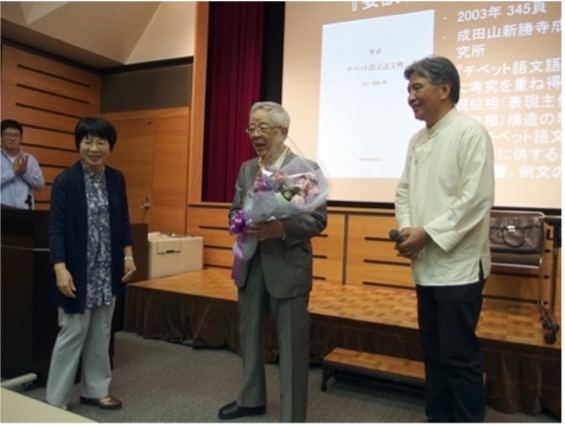
Most of Yamaguchi’s articles in the period between 1954 and 1981 were devoted to the study of the ancient history and language of Tibet. Whereas the book mentioned above was the culmination of his research on ancient Tibetan history, the fruit of his studies on the Tibetan language was Chibettogo bungo bunpō チベット語文語文法 (The Grammar of Classical Tibetan; Tokyo: Shunjūsha, 1998). This book is dedicated to R. A. Stein and Hajime Nakamura, both of whom had strongly encouraged him to complete it. Yamaguchi’s reading of all kinds of Tibetan texts provided the foundation for this book. Sample sentences were gathered from a great variety of works, including Dunhuang documents, inscriptions, history books, Buddhist writings, and indigenous Tibetan grammar commentaries, dating from the 8th to 18th centuries. A compact “outline” of Tibetan grammar, Gaisetsu Chibettogo bungo bunten 概説チベット語文語文典 (Tokyo: Shunjūsha, 2002), was also published for the use of students. His elucidation of Tibetan grammar is to a certain degree different from that of Western scholars and draws on Japanese grammar, for the Tibetan and Japanese languages have some similarities in their use of verbs and sentence structure.

Yamaguchi published more than 100 articles in Japanese and about 20 in English or French, among which the most notable are: “Sanjūju, Shōnyūhō no seiritsu jiki o megutte” 『三十頌』『性入法』の成立時期をめぐって, Tōyō Gakuhō 東洋学報 57-1/2, 1976 (English version: “On the Composition of the Sum cu pa and the rTags kyiḥ jug pa,” Memoirs of the Research Department of the Toyo Bunko 47, 1989); “Denkaruma 824nen seiritsu setsu” 『デンカルマ』八二四年成立説 (The Compilation of the lDan dkar ma in A.D. 824), Naritasan Bukkyō Kenkyūjo Kiyō 成田山仏教研究所紀要 (Journal of Naritasan Institute for Buddhist Studies) 9, 1985; “Chibetto reki chijunhō teisū no imi to rekishiteki jungetsu nenpyō” チベット暦置閏法定数の意味と歴史的閏月年表, Naritasan Bukkyō Kenkyūjo Kiyō 13, 1990 (English version: “The Significance of Intercalary Constants in the Tibetan Calendar and Historical Tables of Intercalary Months,” Tibetan Studies, PIATS Narita 1989, Part 2, 1992); Shoōtōshi meijikyō no chosha to seiritsunen” 『諸王統史明示鏡』の著者と成立年, Tōyō Gakuhō 3, 1978 (English version: “On the Author and the Date of the rGyal rabs rnams kyi byung tshul gsal ba’i me long,International Conference on China Border Area Studies, Taipei, 1984); “The Conflict in Early Seventeenth-century Tibet and the Kokonor Mongols,” Naritasan Bukkyō Kenkyūjo Kiyō 16, 1993; “The Sovereign Power of the Fifth Dalai Lama: sPrul-sku gZims-khang gong-ma and the Removal of Governor Nor-bu,” Memoirs of the Research Department of the Toyo Bunko 53, 1995; and “The Emergence of the Regent Sangs-rgyas-rgya-mtsho and the Denouement of the Dalai Lamas’ First Administration,” Memoirs of the Research Department of the Toyo Bunko 57, 1999. His later English papers were translated by his student Rolf Giebel, whom I also thank for improving the English of this obituary.

Yamaguchi also edited books, contributing articles of his own to them: Tonkō kogo bunken 敦煌胡語文献 (Dunhuang Documents Written in Non-Chinese Languages; Tokyo: Daitō Shuppansha, 1985) includes studies of documents in the Uyghur, Khotanese, Sogdian, and Tibetan languages by frontline Japanese scholars at the time, namely, Takao Moriyasu, Hiroshi Kumamoto, Asao Iwamatsu, Yutaka Yoshida, Noriaki Hakamaya, Shirō Matsumoto, Akira Saito, Toshio Hiramatsu, Soshū Nishioka, Katsumi Okimoto, Satoru Harada, Yoshirō Imaeda, and Zuihō Yamaguchi. To commemorate his 60th birthday, he supervised the compilation of the book Chibetto no Bukkyō to shakai チベットの仏教と社会 (Buddhism and Society in Tibet; Tokyo: Shunjūsha, 1986), to which, in addition to some of those named above, his colleagues, students, and young Tibetologists contributed, including Taishun Ueyama, Ryūtoku Kimura, Shōrei Nakayama, Kimiaki Tanaka, Chizuko Yoshimizu, Kazunobu Matsuda, Shunzō Onoda, Yōichi Fukuda, Musashi Tachikawa, Kōdō Yotsuya, Tsuguhito Takeuchi, Yoshirō Imaeda, Rentarō Ikeda, Yasuhiko Nagano, Masahiro Shimoda, Junko Miyawaki, and Shinjō Kawasaki.

At the University of Tokyo, Yamaguchi had three classes: Tibetan grammar for beginners, an undergraduate seminar on Tibetan historical literature, and a seminar for graduate students. The textbook for Tibetan grammar had been handwritten by Yamaguchi himself, for his grammar was first published in 1998. At that time, the only dictionaries available were Jäschke’s and Chandra Das’s Tibetan-English dictionaries. There were many words that were not included in these dictionaries, and so Yamaguchi served us as if he were a living dictionary. In the undergraduate seminar, he read what he wanted to read. We read biographies of the 3rd to 5th Dalai Lamas continuously until his retirement in 1986. He had the students write their translations on the blackboard and cheerfully corrected them in his distinctive voice and intonation, saying, “That’s completely wrong.” Eventually students from the University of Tokyo disappeared from this class, and Junko Miyawaki and Yumiko Ishihama joined from outside. In his last year, I was the only student. With graduate students he read the Grub mtha’ of lCang skya Rol pa’i rdo rje. He pestered the students with questions because he said he was not a specialist in Buddhism. Everyone enjoyed the debates, and lCang skya became a special figure for the students. Noriaki Hakamaya, for instance, said that lCang skya appeared in his dreams. Students received a solid training in how to read Tibetan texts of various kinds.

In January 1986, Yamaguchi retired from the University of Tokyo and moved to Nagoya University. After three years there, he became professor emeritus of the University of Tokyo in 1989 and began commuting to the Naritasan Institute of Buddhist Studies, in which he had been involved as a visiting researcher. This same year, 1989, was the year when the 5th Seminar of the International Association for Tibetan Studies Conference was held at Narita, and he was instrumental in bringing the Seminar to Narita.

August 1989, at the 5th IATS (Narita View Hotel); from right to left: H. Uebach, R. Emmerick, Zuihō Yamaguchi, Shoseki Tsurumi (abbot of Naritasan Shinshoji temple), and Chizuko Yoshimizu.

Yamaguchi worked at the Naritasan Institute until about 2016 as well as at the Toyo Bunko. His last appearance in public was May 22, 2016, at a talk event titled “Dr. Zuihō Yamaguchi talks about Tibet and himself,” which was organized by Kawachen Bookstore to celebrate his 90th birthday. He talked about some good memories of R. Stein and his own studies. After the talk, we joined him at a Tibetan restaurant in Tokyo, and I was relieved to see that his appetite was as good as ever, for he really enjoyed his food.

With Kelsang Tahuwa of Kawachen Bookstore, May 22, 2016.

In 1987–1988, Yamaguchi published the two-volume book Chibetto チベット (Tibet; University of Tokyo Press), aimed at general readers interested in Tibet, and it received the Mainichi Publishing Culture Award. This book incorporated all his knowledge of Tibetan studies and became a classic that will be read and enjoyed for many years. I remember that he was always and anywhere reading some Tibetan text, not only in his office but even on the train. He greatly enjoyed and loved reading the Tibetan language. He visited Lhasa once when he was over the age of sixty. Although he suffered from altitude sickness, he enjoyed his stay, for as he repeatedly told me later, “A picture is worth a thousand words” (百聞は一見に如かず). This was the moment when what he had learned from texts came to life before his eyes.

His last book was Hyōsetsu Indo Bukkyō tetsugaku shi 評説インド仏教哲学史 (A Commentary on the History of Indian Buddhist Philosophy; Iwanami Shoten, 2010), in which he brought together his own interpretations of Buddhism. After turning sixty he became obsessed with Buddhist philosophy. His favorite Buddhist masters were Nāgārjuna, Śāntarakṣita, and Kamalaśīla. The Suttanipāta and the Prajñāpāramitāsūtras also provided him with essential sources of Buddhist thought. Although his interpretation of Buddhist philosophy has not attracted much attention, his deep consideration of the fact that our cognition is based on representations of external objects and verbal constructions detached from the flow of time is useful, especially for understanding Madhyamaka thought, and deserves to be listened to. He grew up in a Sōtō Zen temple and through Naritasan also became familiar with the Shingon Buddhism of Kūkai, and so it may have been only natural that he devoted his final years to Buddhist studies.

He told me that when he was young, he had once been impressed by an article he happened to pick up in the library of the Toyo Bunko. He said, “If someone someday comes across an article of mine and is impressed by it, I will chuckle from beyond the grave” (俺の論文もいつか誰かが見つけて、こんな論文があったのか、と感心してくれたら、そのときは草葉の陰で笑うんだ). I wonder if he is chuckling now. Or is it still too soon?

རྒན་དབྱངས་དགའ་དམ་པའི་མི་ཚེ་དང་མྱ་ངན་ཞུ་ཚིག (༡༩༦༤- ༢༠༢༢)

ཇེ་ནེ་ཊི་རྒྱ་མཚོས་བྲིས།

Yangga delivering a lecture. Date and photographer unknown. | དབྱངས་དགའ་ལགས་ཀྱིས་གཏམ་བཤད་གནང་བཞིན་པ།

རྒྱལ་སྤྱིའི་བོད་རིག་པ་ལྷན་ཚོགས་ IATS ཀྱི་ཚོགས་མི་དང་བོད་ཀྱི་གསོ་རིག་ལོ་རྒྱུས་སྨྲ་བ་ཕུལ་བྱུང་དབྱངས་དགའ་ལགས་སྐུ་གཤེགས་པའི་སྐོར་སྐྱོ་གདུང་ཆེན་པོས་སྙན་སེང་ཞུ་རྒྱུ་ཡིན། ཁོང་ནི་ངའི་དགེ་རྒན་ཡིན་ལ་སློབ་མ་ཡང་ཡིན།

རྒན་དབྱངས་དགའ་ལགས་སྤྱི་ལོ་ ༢༠༢༢ ལོའི་ཟླ་བ་ ༡༢ པའི་ཚེས་ ༡༧ གྱི་ས་སྲོད་ལ་མཆིན་པའི་འབྲས་ནད་རྐྱེན་གྱིས་རྒྱ་ནག་ཁྲིན་ཏུའུ་རུ་འདས་གྲོངས་སུ་གྱུར། དབྱངས་དགའ་ལགས་རང་ལོ་ ༥༨ ཐོག་དུས་མ་རན་པར་འདས་གྲོངས་སུ་གྱུར་སྐབས་ལྷ་སར་ཡོད་པའི་བོད་ལྗོངས་གསོ་རིག་སློབ་གྲྭ་ཆེན་མོའི་ www.ttmc.edu.cn/info དགེ་རྒན་ཆེན་མོ་ཞིག་ཡིན། དབྱངས་དགའ་ལགས་ལ་ཐོག་མར་སྤྱི་ལོ་ ༢༠༡༥ ཡས་མས་ནས་མཆིན་པའི་སྐྲན་ནད་ཡོད་པར་ངོས་འཛིན་བྱས་ཀྱང་། ཁོང་གིས་ཚེ་མཇུག་གི་ཟླ་བ་མཐའ་མ་འགའི་བར་ཕྱག་ལས་དང་རྩོམ་འབྲི་མུ་མཐུད་གནང་ཐུབ་ཡོད། ཁོང་རྒྱ་ནག་ཁྲིན་ཏུའུ་རུ་ཡོད་པའི་གནས་སྐབས་ཀྱི་རང་ཁྱིམ་དེར་ཚེ་ལས་འདས། དེར་ཁོང་གི་ཆུང་མ་དང་ལྷན་དུ་ཐག་ཉེའི་སྨན་ཁང་དུ་སྨན་བཅོས་བསྟེན་ཆེད་བཞུགས་དགོས་བྱུང་། ཁོང་གི་གཏན་སྡོད་ཁྱིམ་གཞིས་ནི་ལྷ་ས་དང་ནག་ཆུར་ཡོད་ཅིང་། སྨན་ཁང་ནས་ཕྱི་ལ་ཐོན་རྗེས་ཚེའི་འཕེན་པ་རྫོགས་ལ་ཉེ་བའི་མཐའ་མའི་ཉིན་འགའི་རིང་ལ་ནང་མི་ཚོ་དང་མཉམ་དུ་སྡོད་ཐུབ་པ་བྱུང་ཡོད། ཁོང་གི་འདས་ཤུལ་དུ་ཁོང་གི་ཆུང་མ་དང་བུ་མོ་གཉིས་ཡོད།

རྒན་དབྱངས་དགའ་ནི་སྤྱི་ལོ་ ༡༩༦༤ ལ་ནག་ཆུ་འབྲི་རུར་འཁྲུངས་ཤིང་། དེར་མཐོ་འབྲིང་སློབ་གྲྭ་བར་སློབ་གཉེར་གནང་། ཁོང་ལ་སྤྱི་ལོ་ ༡༩༨༩ ལ་ལྷ་སའི་བོད་ལྗོངས་སློབ་གྲྭ་ཆེན་མོ་ནས་སློབ་རམས་པའི་ (bachelor’s degree) ལག་འཁྱེར་ཐོབ་ཅིང་། སྤྱི་ལོ་ ༡༩༩༡ ལ་བོད་ལྗོངས་གསོ་རིག་སློབ་ཆེན་ནས་ཀྱང་སློབ་རམས་ལག་འཁྱེར་ཞིག་བླངས། ཁོང་གི་གཙུག་ལག་རབ་འབྱམས་པའི་ (master’s degree) ལག་འཁྱེར་སྤྱི་ལོ་ ༢༠༠༢ ལོར་བོད་ལྗོངས་གསོ་རིག་སློབ་ཆེན་ནས་ཐོབ། ཁོང་གི་གསོ་རིག་དགེ་རྒན་གཙོ་བོ་དག་ནི་སྐད་གྲགས་ཅན་གྱི་མཁན་པོ་ཁྲོ་རུ་ཚེ་རྣམ་དང་མཁན་པོ་ཚུལ་ཁྲིམས་རྒྱལ་མཚན་གཉིས་ཡིན། སྤྱི་ལོ་ ༢༠༠༣ ལ་ཁོང་ཧ་ཝར་ཌི་གཙུག་ལག་སློབ་ཆེན་གྱི་ཨེ་ཤེ་ཡ་ནང་མ་དང་ཨལ་ཊའེ་ཁི་སྡེ་ཚན་ (Inner and Altaic Studies at Harvard University) དུ་འབུམ་རམས་པའི་སློབ་མར་ངོས་ལེན་སློབ་འཇུག་བྱུང་། དེར་ཁོང་གིས་ང་དང་ལེའོ་ནར་ཌི་ཝན་ཌེར་ཁེབ་ Leonard van der Kuijp ལྷན་དུ་སློབ་གཉེར་གནང་ཞིང་། ཕྱི་ལོ་ ༢༠༡༠ ལོར་འབུམ་རམས་པའི་ལག་འཁྱེར་བླངས།

སྤྱི་ལོ་ ༡༩༩༡ ནས་མགོ་བཙུགས་ཏེ་དབྱངས་དགའ་ལགས་ནས་བོད་ལྗོངས་གསོ་རིག་སློབ་ཆེན་དུ་སློབ་ཁྲིད་པ་ (instructor) དང་། དེ་ནས་འཆད་ཁྲིད་དགེ་རྒན་ (lecturer) གྱི་ཕྱག་ལས་གནང་། སྤྱི་ལོ་ ༢༠༠༠ ལ་ཁོང་སློབ་གཉེར་ལས་ཁུངས་ Dean’s office ཀྱི་འགན་འཛིན་གཞོན་པ་ (Associate Director) ལ་གནས་སྤར་བྱས། ཧ་ཝར་ཌི་སློབ་ཆེན་ནས་སློབ་མཐར་ཕྱིན་རྗེས་སྤྱི་ལོ་ ༢༠༡༣ ལ་ཕྱིར་ལྷ་སར་འབྱོར་འཕྲལ་དགེ་རྒན་ཆེན་མོ་གཞོན་པ་ (Associate Professor) ལ་གནས་སྤར་དང་སྤྱི་ལོ་ ༢༠༡༨ ལ་དགེ་རྒན་ཆེན་མོའི་མཚན་གནས་ཐོབ། དབྱངས་དགའ་ལགས་ནས་ཧ་ཝར་ཌི་ལ་བོད་ཀྱི་སྐད་ཡིག་དང་བོད་སྨན་སྐོར་སློབ་ཁྲིད་གནང་མྱོང་བ་མ་ཟད། ཁོང་གིས་སྤྱི་ལོ་ ༢༠༠༩ ནས་ ༢༠༡༠ བར་གྱི་སློབ་ལོའི་སྐབས་སུ་མི་ཞི་གྷན་གཙུག་ལག་སློབ་ཆེན་ (University of Michigan) ཨེ་ཤེ་ཡའི་སྐད་ཡིག་དང་རིག་གཞུང་སྡེ་ཚན་ (Department of Asian Languages and Cultures) དུ་བོད་ཡིག་འཆད་ཁྲིད་ཡང་གནང་མྱོང་། སྤྱི་ལོ་ ༢༠༡༣ ལ་ཁོང་ལ་མི་ཞི་གྷན་གཙུག་ལག་སློབ་ཆེན་དུ་ཕྱིར་ལོག་བྱ་ཆེད་འབུམ་རམས་ཕྱི་མའི་སློབ་ཡོན་ཐོབ་ཀྱང་། ཁོང་ལ་ཨ་རིར་འགྲོ་སྐྱོད་ཀྱི་ཆོག་མཆན་མ་རག་རྐྱེན་དེ་དང་ལེན་བྱེད་མ་ཐུབ། ཉེ་བའི་ལོ་ཤས་རིང་དབྱངས་དགའ་ལགས་ནས་ལྷོ་ནུབ་མི་རིགས་སློབ་ཆེན་དུ་གདན་ཞུས་སློབ་དཔོན་གྱི་འགན་བཞེས་མྱོང་། ཁོང་ནི་ད་དུང་བོད་རང་སྐྱོང་ལྗོངས་གནའ་དཔེ་སྲུང་སྐྱོབ་ཆེད་མཁས་ཚོགས་ཆུང་གི་འགན་འཛིན་གཞོན་པ་དང་། བོད་རང་སྐྱོང་ལྗོངས་བོད་སྨན་ཚད་གཞི་གཏན་འབེབས་ཚོགས་ཆུང་གི་ཚོགས་མི་ཞིག་ཀྱང་ཡིན་པ་རེད།

དབྱངས་དགའ་ལགས་ལ་སྤྱི་ལོ་ ༢༠༡༩ ལ་པེ་རི་སིའི་རྒྱལ་སྤྱིའི་བོད་རིག་པ་ལྷན་ཚོགས་ཀྱི་བགྲོ་གླེང་ཚོགས་ཆེན་ཐེངས་ ༡༥ པ་ཁོ་ནར་ཆེད་རྩོམ་སྙན་སྒྲོན་གྱི་གོ་སྐབས་ལས་མ་ཐོབ། ཁོང་གིས་ད་དུང་སྤྱི་ལོ་ ༢༠༡༦ ལ་ནོར་ཝེ་ཡི་བྷེར་གྷན་ Bergen དུ་འཚོགས་པའི་རྒྱལ་སྤྱིའི་བོད་རིག་པ་ལྷན་ཚོགས་ཀྱི་བགྲོ་གླེང་ཚོགས་ཆེན་ཐེངས་ ༡༤ པའི་ལས་རིམ་དུ་མིང་ཐོ་བཀོད་ཡོད་པ་དང་། དེར་ཁོང་གི་དཔྱད་རྩོམ་ངོས་ལེན་བྱས་ཤིང་སྒྲོག་སྦྱང་དུས་བཅད་བྱས་ཀྱང་། མཐའ་མཇུག་དེར་ཁོང་གི་ཕྱིར་སྐྱོད་ལག་འཁྱེར་ཕྱིར་བསྡུ་བྱས་ཡོད།

ང་རང་སྒེར་ལ་དབྱངས་དགའ་ལགས་ངོ་ཤེས་རྒྱུས་ལོན་བྱེད་པར་གོ་སྐབས་བཟང་པོ་ཐོབ། ང་ཐོག་མ་སྤྱི་ལོ་ ༢༠༠༠ ལ་ལྷ་ས་ནས་རྒྱལ་སྤྱིའི་བོད་ཀྱི་གསོ་རིག་ཚོགས་ཆེན་ཞིག་གི་སྟེང་དུ་ཁོང་དང་མཇལ་འཕྲད་བྱུང་། སྐབས་དེར་ངས་ད་དུང་ཨེམ་ཧར་སི་མཐོ་སློབ་ (Amherst College) ལ་སློབ་ཁྲིད་བྱེད་ཀྱིན་ཡོད་པ་དང་། ཁོང་གིས་བོད་ལྗོངས་གསོ་རིག་སློབ་ཆེན་དུ་གཙུག་ལག་རབ་འབྱམས་པའི་སློབ་གཉེར་ཚར་ལ་ཉེ་ཙམ་རེད། ངོ་མཚར་ལྡན་པའི་ལྷ་སར་འཚོགས་པའི་ཚོགས་ཆེན་དེའི་གཟའ་འཁོར་གཅིག་གི་རིང་། བོད་ཀྱི་ས་ཕྱོགས་གང་ས་ནས་ཕེབས་པའི་གསོ་རིག་ཆེད་མཁས་དུ་མའི་མཉམ་དུ་ང་ཚོས་གསོ་རིག་སྐོར་ལ་བསམ་ཚུལ་བརྗེ་ལེན་ཡང་ཡང་བྱས་པ་ཡིན། ང་རང་ལ་མི་གཞོན་ནུ་དེས་བོད་ཀྱི་གསོ་རིག་སྐོར་གླེང་སློང་བྱེད་སྐབས་ཀྱི་ཞིབ་ཆ་དང་གནད་ལ་འཁེལ་བའི་སྐད་ཆ་ལ་རྗེས་སུ་ཡི་རངས་སྐྱེས་བྱུང་། དེ་ནས་རྗེས་ལོ་དེར་ང་རང་ཧ་ཝར་ཌི་ལྷ་ཆོས་སློབ་གྲྭར་ (Harvard Divinity School) གནས་སྤོ་བྱས་པ་དང་བསྟུན། དེར་ངས་རྒྱལ་སྤྱིའི་ཆེད་ལས་མཁས་པ་གདན་ཞུ་བྱེད་པའི་གོ་སྐབས་དང་མཐུན་རྐྱེན་ཡོད་པ་ཤེས་མ་ཐག་དེ་ལྟར་གདན་ཞུ་ཡང་བྱས། དེ་ལྟར་སྤྱི་ལོ་ ༢༠༠༢ ལ་དབྱངས་དགའ་ལགས་ཧ་ཝར་ཌི་ལ་གདན་ཞུས་ཆེད་མཁས་ངོ་བོའི་ཐོག་གདན་ཞུ་བྱེད་ཐུབ་པ་བྱུང་། དེ་རྗེས་ཁོང་ཕྱིར་ལྷ་སར་ལོག་ནས་ཧ་ཝར་ཌི་གཙུག་ལག་སློབ་ཆེན་གྱི་ ཨེ་ཤེ་ཡ་ནང་མ་དང་ཨལ་ཊའེ་ཁི་སྡེ་ཚན་ལ་འབུམ་རམས་པའི་སློབ་འཇུག་སྙན་ཞུ་ཕུལ་ཏེ། ངའི་ལམ་སྟོན་འོག་གི་སློབ་ཕྲུག་ཏུ་གྱུར་བ་རེད། ཁོང་ལ་བོད་ལྗོངས་གསོ་རིག་སློབ་ཆེན་ནས་ལོ་དེ་རང་ལ་གཙུག་ལག་རབ་འབྱམས་པའི་ལག་འཁྱེར་ཐོབ་ཡོད།

དབྱངས་དགའ་ལགས་སྤྱི་ལོ་ ༢༠༠༣ ཡི་སྟོན་ཁར་ཧ་ཝར་ཌི་ལ་རང་གི་འབུམ་རམས་པའི་སློབ་གཉེར་ཆེད་ཕྱིར་ལོག་གནང་། ཁོང་མི་འཇོན་ཐང་ཅན་ཞིག་ཡིན་པ་ནི་རང་ཉིད་སློབ་མའི་ཚུལ་དུ་སྡོད་སའི་སམ་མེར་ཝིལ་ Somerville དུ་རང་གི་ཆུང་མ་དང་བུ་མོ་གཉིས་ལོ་གཅིག་གི་ནང་ལ་ལེན་ཐུབ་པ་བྱུང་ཞིང། དངོས་གནས་བཤད་ན་ཁོང་གི་བུ་མོ་གཉིས་ཀར་གཟུགས་གཞི་བདེ་ཐང་གི་དཀའ་ངལ་ཡོད་པས། ཁོང་གིས་སྦོ་སི་ཊོན་དུ་ཡོད་པའི་ང་ཚོའི་སྨན་ཁང་ཡག་པོ་ཁག་གི་ནང་དུ་དྲག་སྐྱེད་སྨན་བཅོས་བྱེད་ཐུབ་ཡོད།

དབྱངས་དགའ་ལགས་ནས་ཧ་ཝར་ཌི་ལ་ལོ་ངོ་བདུན་རིང་སློབ་གཉེར་བྱས་ཤིང་། ངའི་ལམ་སྟོན་འོག་ཁོང་གིས་བོད་ཀྱི་གསོ་རིག་རྒྱུད་བཞིའི་འབྱུང་ཁུངས་ཐད་ལ་འབུམ་རམས་པའི་ཆེད་རྩོམ་སྤུས་ལེགས་ཤིག་བྲིས། ཆེད་རྩོམ་དེར་ཁོང་གིས་རྒྱུད་བཞིའི་ལེའུའི་ཡོངས་ཀྱི་སྒྲོམ་གཞིའི་གྲུབ་ཚུལ་དང་ལེའུ་རེ་རེའི་ནང་དོན་སྐོར་རྒྱ་གར་ཚེ་ཡི་རིག་པ་དང་ཞིབ་བསྡུར་ནན་པོ་བྱས་ཡོད། ཆེད་རྩོམ་གྱི་ས་བཅད་རེ་འགར་ཁོང་གིས་རྒྱུད་བཞིར་རྒྱ་གར་ཚེ་ཡི་རིག་པའི་ཤན་ཤུགས་ཆེན་པོ་ཐེབས་ཡོད་ནའང་། ས་བཅད་གཞན་པ་ཁག་ཅིག་ཏུ་རྒྱུད་བཞིའི་རྩོམ་པ་པོ་གཡུ་ཐོག་ཡོན་ཏན་མགོན་པོ་ཡིས་ཨེ་ཤེ་ཡ་ཤར་ནུབ་གཉིས་ཀྱི་སྨན་དཔྱད་ནང་འདྲེན་དང་བོད་རང་གི་གསོ་དཔྱད་ཀྱི་རིག་པས་ཁ་སྐོང་མཛད་ཡོད་པ་བརྗོད་ཡོད། དབྱངས་དགའ་ལགས་ཀྱིས་རང་གི་ཆེད་རྩོམ་ནང་དུ་སྨན་དཔྱད་ལུགས་སྲོལ་མི་འདྲ་བ་གཞན་པ་རྣམས་དཔྱད་ཡིག་ཁུངས་འཕེར་གྱི་རམ་འདེགས་འོག་གསལ་སྟོན་དང་། ཁོང་གིས་རྒྱུད་བཞིའི་ལེའུ་མང་པོ་ཞིག་ད་དུང་ལྷ་ས་ན་ཡོད་ཅིང་ཁོང་དང་ཁོང་གི་ཕྱག་རོགས་ཚོས་དཔྱད་ཞིབ་བྱེད་ཐུབ་ཡོད་པའི་གནའ་བོའི་བོད་ཀྱི་གསོ་དཔྱད་ཀྱི་གཞུང་ལུགས་ངེས་ཅན་ཞིག་ལ་བརྟེན་ནས་གྲུབ་ཚུལ་བསྟན་ཡོད། བོད་ཀྱི་གསོ་དཔྱད་ཀྱི་གཞུང་ལུགས་དེ་དག་ནི་རྒྱུད་བཞིའི་སྔོན་ནས་ཡོད་ཅིང་རྒྱ་གར་ཚེ་ཡི་རིག་པ་དང་འབྲེལ་བ་མེད་པའི་སྨན་དཔྱད་ལུགས་སྲོལ་གཞན་པ་ཞེ་ཅིག་ལ་གཞིར་བཞག་ཡོད་པར། དེ་དག་ནི་ «བི་ཇི་པོ་ཏི་ཁ་སེར་» དང་ «བྱང་ཁོག་དམར་བྱང་གསལ་བའི་སྒྲོན་མེ།» «སྨན་དཔྱད་ཟླ་བའི་རྒྱལ་པོ་» བཅས་ཡིན་པ་རེད།

དེའི་རྗེས་སུ་དབྱངས་དགའ་ལགས་ཀྱིས་རྒྱུད་བཞིའི་བྱང་ཁོག་སྟོད་ཀྱི་མཚོན་རྨ་དང་འབྲེལ་བའི་སྨན་དཔྱད་ཤེས་བྱ་ལ་དམིགས་བསལ་དོ་སྣང་བྱེད་མགོ་བཙུགས། དབྱངས་དགས་ཚོད་དཔག་བྱས་དོན་ལྟར་ན། བོད་ཀྱི་གསོ་དཔྱད་ཀྱི་ཆ་ཤས་འདི་ནི་དམག་འཁྲུག་སྐབས་མིའི་བྱང་ཁོག་ཏུ་མདའ་ཇི་ལྟར་འཛུལ་ཚུལ་དང་ལུས་ཀྱི་ཆ་ཤས་གཞན་ལ་གནོད་སྐྱོན་མེད་པར་མདའ་དེ་ཕྱིར་འདོན་ཐབས་ཀྱི་གཤག་བཅོས་བྱེད་ལུགས་འདྲ་མིན་ལ་བརྟེན་པའི་ལག་ལེན་དངོས་མྱོང་གི་བོད་ཀྱི་གནའ་བོའི་ཤེས་བྱ་དང་འབྲེལ་པ་ཡོད་པར་ཡིད་ཆེས་བརྙེད།

དབྱངས་དགའ་ལགས་ཀྱི་ཆེད་རྩོམ་དུ་འཁོད་པའི་དོན་གནད་གལ་ཆེན་གཞན་ཞིག་ནི། བོད་ཀྱི་ལོ་རྒྱུས་ཁྲོད་རྒྱུད་བཞི་ཐོག་མར་དར་སྤེལ་གནང་བར་མཛད་རྗེས་ཆེན་པོ་བཞག་པའི་བྲང་ཏིའི་རྒྱུད་ཀྱི་སྨན་པ་རྣམས་དང་། གོང་སྨན་དང་ཚ་རོང་ཁྱིམ་རྒྱུད་བཅས་ཀྱི་སྐོར་འཁོད་ཡོད།

མཐའ་མར་དབྱངས་དགའ་ལགས་ཀྱི་བྱས་པ་གལ་ཆེན་ཞིག་ནི་གཡུ་ཐོག་ཡོན་ཏན་མགོན་པོ་རྙིང་མའི་སྐོར་ལ་ཞིབ་འཇུག་བྱས་པ་དེ་ཡིན། གཡུ་ཐོག་རྙིང་མའི་མི་ཚེའི་ལོ་རྒྱུས་དང་བྱུང་བ་དེ་ཕལ་ཆེར་དུས་རབས་ ༡༦ ནས་ ༡༧ བར་སྐབས་སུ་གསར་བཟོ་བྱས་ཡོད་པ་མ་ཟད། དེ་ཡང་དེང་སྐབས་ང་ཚོས་གཡུ་ཐོག་གསར་མ་ཞེས་འབོད་ཀྱིན་པ་ཁོང་གི་རྣམ་ཐར་ཡིག་ཆ་སྔ་མོ་དག་ལ་གཞི་བཅོལ་བ་ཞིག་ཡིན་པ་དབྱངས་དགས་ཚོད་དཔག་གནང་ཡོད། དེའི་ཐད་དབྱངས་དགས་མ་མཐར་ཡང་དུས་རབས་ ༡༣ ནས་ཁུངས་སྐྱེལ་ར་སྤྲོད་བྱེད་ཐུབ་ལུགས་བརྗོད་དེ་འདས་པའི་བོད་ཀྱི་གསོ་རིག་ལོ་རྒྱུས་མཁས་པ་དག་གི་ཞིབ་འཇུག་གི་ཕུལ་བྱུང་བཞེད་ཕྱོགས་ཀྱི་རྗེས་སུ་འབྲངས། དབྱངས་དགས་དུས་རབས་ ༡༦ གོང་གི་བོད་ཀྱི་གསོ་རིག་ལོ་རྒྱུས་ཡིག་ཆའི་ནང་དུ་རྙིང་མ་ཞེས་པ་ (གཡུ་ཐོག་གསར་མའི་ཁ་གཏད་) ཞིག་གསལ་གྱི་མེད་པ་གཏན་འཁེལ་གནང་སོང་ལ། ཁོང་གིས་ད་དུང་བོད་ཀྱི་ཡར་ཀླུང་བཙན་པོའི་རྒྱལ་རབས་སྐབས་སུ་བླ་སྨན་པ་གཡུ་ཐོག་ཅེས་པ་ཞིག་ཡོད་སྲིད་པའི་བཞེད་སྲོལ་ལ་དགག་པ་གནང་། གང་ལྟར་ཧ་ཅང་གལ་ཆེན་ཞིག་ནི་ཁོང་གིས་རྒྱུད་བཞིའི་རྩོམ་པ་པོ་ནི་དུས་རབས་ ༡༢ པའི་ནང་བྱུང་བའི་མི་སྣ་སྟེ། དེང་དུས་མཁས་པ་ཚོས་འབོད་པའི་གཡུ་ཐོག་གསར་མ་ཡིན་པའི་ཐད་ཡིད་རྟོན་འཕེར་བའི་གནས་ལུགས་རྒྱུ་མཚན་བཀོད་ཡོད། རྒྱུད་བཞི་ནི་ལེགས་སྦྱར་ནས་བསྒྱུར་བ་ཞིག་མིན་ལ། དེ་ནི་དུས་རབས་ ༡༢ པའི་བོད་ཀྱི་སྨན་པ་གཡུ་ཐོག་ཡོན་ཏན་མགོན་པོས་ཨེ་ཤེ་ཡ་དང་དེ་ལས་བརྒལ་བའི་ཡུལ་ལུང་གི་སྨན་དཔྱད་ལུགས་སྲོལ་དུ་མ་ཕྱོགས་སྡོམ་བྱས་ཏེ་མཛད་པའི་གསར་གཏོད་དང་ཐོག་མའི་བསྟན་བཅོས་ཤིག་ཡིན་པར་འདོད། ཡིད་དབང་འཕྲོག་པའི་དོན་གནད་འདིའི་རྙོག་འཛིང་ཅན་གྱི་ཞིབ་ཕྲའི་རང་བཞིན་ལ་གཟིགས་འདོད་ན། ཀློག་པ་པོ་ཚོས་གཤམ་དུ་གསལ་བའི་དབྱངས་དགའི་དབྱིན་ཡིག་ཐོག་གི་དཔྱད་རྩོམ་རྣམས་ལ་གཟིགས་ཆོག དེའི་གྲས་ཀྱི་གཅིག་ནི་སྤྱི་ལོ་ ༢༠༡༤ ནས་བྲིས་ཤིང་གཞན་དེ་སྤྱི་ལོ་ ༢༠༡༩ ནས་བརྩམས། དེ་མ་ཟད་ཀློག་པ་པོ་ཚོར་གཤམ་དུ་འཁོད་པའི་དབྱངས་དགས་བརྩམས་པའི་གཡུ་ཐོག་ཡོན་ཏན་མགོན་པོའི་སྐུ་ཚེ་སྐོར་གྱི་དཔེ་དེབ་གསར་པར་གཟིགས་རྒྱུར་འབོད་སྐུལ་ཞུ་རྒྱུ་ཡིན། དེ་ནི་ཁོང་གིས་རང་ཉིད་ཀྱི་མི་ཚེའི་ལོ་དུས་མཐའ་མའི་ནང་དུ་དཔར་འགྲེམས་བྱས་ཤིང་། དེའི་དཔར་མ་ཞིག་ང་ལ་ཉེ་ཆར་འབྱོར་བྱུང་། ང་ལ་ད་དུང་དཔེ་དེབ་འདི་ཞིབ་ཚགས་ཀྱིས་ཀློག་ཁོམ་བྱུང་མེད་ནའང་། དེར་དབྱངས་དགའ་ལགས་ཀྱིས་གཡུ་ཐོག་ཟེར་བའི་མི་སྣའི་བྱུང་རབས་ཀྱི་རྣམ་ཐར་དྲུག་ཧྲིལ་པོ་མཁོ་འདོན་བྱས་འདུག་ཅིང་། གནད་དོན་དེའི་ཐད་ཁོང་གིས་དབྱེ་ཞིབ་གསར་ཤོས་དེ་ཡང་གནང་ཡོད་ཅེས་བརྗོད་ཐུབ།

Yangga at his Harvard Graduation, May 2010. Photographer not known. | དབྱངས་དགའ་ལགས་ཧ་ཝར་ཌི་སློབ་ཆེན་ནས་སློབ་མཐར་ཕྱིན་པའི་སྐབས། སྤྱི་ལོ་ ༢༠༡༠

དབྱངས་དགའ་ལགས་ཀྱིས་ཆེད་རྩོམ་བྲིས་ཚར་ཏེ་ཧ་ཝར་ཌི་ནས་སློབ་མཐར་ཕྱིན་རྗེས་བོད་དུ་ཕྱིར་ལོག་གནང་ཞིང་། མུ་མཐུད་དུ་འཆད་རྩོད་རྩོམ་གསུམ་གྱི་རིག་གནས་བྱ་བར་ཞུགས་ཞོར་སློབ་ཁྲིད་དང་འཛིན་སྐྱོང་གི་ལས་འགན་ཡང་འཁུར། ཁོང་གིས་ལྷ་སའི་ཡིག་ཚགས་དང་དཔེ་མཛོད་འདྲ་མིན་ནང་དུ་ཉམས་ཞིབ་རྒྱུན་ཆད་མེད་པར་གནང་སྟེ་རྩོམ་ཡིག་ཡང་དུ་མ་བྲིས། ཁོང་གི་མི་ཚེའི་ལོ་རྒྱུས་མདོར་བསྡུས་ཆ་ཚང་ཞིག་ད་ལྟ་གྲ་སྒྲིག་བྱེད་བཞིན་ཡོད་པ་དང་། དེ་བྲིས་ཚར་བ་དང་དགོས་མཁོ་མཆིས་ཚེ་ང་བརྒྱུད་ནས་ལེན་ཆོག ཡོངས་གྲགས་ལྟར་ཁོང་གིས་རང་གི་མི་ཚེའི་ལོ་དུས་མཐའ་མའི་སྐབས་སུ་རིན་ཐང་ཆེ་ཞིང་ཡིག་རྙིང་གི་མ་དཔེ་དཀོན་གྲས་ཚུད་པའི་དཔེ་དེབ་གལ་ཆེན་གསུམ་དཔར་འགྲེམས་བྱས་ཤིང་། པོད་འདི་དག་རེ་རེས་བོད་ཀྱི་གསོ་བ་རིག་པའི་སློབ་སྦྱོང་ཐད་ལེགས་སྐྱེས་ཆེན་པོ་བཞག་ཡོད།

«བོད་ལུགས་གསོ་བ་རིག་པའི་ཁོག་དབུབ་གཅེས་བཏུས་རིན་ཆེན་ཕྲེང་བ།» ལྷ་ས། བོད་ལྗོངས་བོད་ཡིག་དཔེ་རྙིང་དཔེ་སྐྲུན་ཁང་། ༢༠༢༢ ། ཤོག་གྲངས་ ༤༤༠

«གཡུ་ཐོག་གསར་རྙིང་གི་རྣམ་ཐར་དང་དེའི་སྐོར་གྱི་དཔྱད་པ་དྲང་གཏམ་རྣ་བའི་བུ་རམ།» (གཡུ་ཐོག་གི་རྣམ་ཐར་དྲུག་ཚུད་ཡོད།) ཁྲིན་ཏུའུ། སི་ཁྲོན་མི་རིགས་དཔེ་སྐྲུན་ཁང་། ༢༠༢༢ ། ཤོག་གྲངས་ ༣༦༠

«བི་ཇི་པོ་ཏི་ཁ་སེར་དང་དེའི་དཔྱད་པ་དགྱེས་པའི་གཏམ།» (དཔར་གཞི་གཉིས་ཡོད་པ་དང་། གནའ་བོའི་བོད་ཀྱི་གསོ་དཔྱད་སྐོར་གྱི་བརྩམས་ཆོས་ཞིག་ཡིན་ལ། དེའི་ནང་ཨེ་ཤེ་ཡ་ནུབ་མ་དང་དེ་ལས་བརྒལ་བའི་སྨན་དཔྱད་ཤེས་བྱ་ཚུད་ཡོད) ལྷ་ས། བོད་ལྗོངས་བོད་ཡིག་དཔེ་རྙིང་དཔེ་སྐྲུན་ཁང་། ༢༠༢༢ ། ཤོག་གྲངས ༣༢༡

གཞན་ཡང་དབྱངས་དགའ་ལགས་ཀྱིས་སྐུ་འབུམ་དགོན་པར་བཞུགས་ཤིང་ཀན་སུའུ་མི་རིགས་དཔེ་སྐྲུན་ཁང་གིས་སྤྱི་ལོ་ ༢༠༠༡ ལ་དཔེ་སྐྲུན་བྱས་ པའི་དེབ་ཕྲེང་གཞན་པ་ཁག་ཅིག་གི་ཆེད་དུ་སྨན་དཔེའི་དཀར་ཆག་གཅིག་ཀྱང་ཚུད་པའི་རྒྱུ་ཆ་ཕྱོགས་སྒྲིག་གནང་ཞིང་། ད་དུང་སྤྱི་ལོ་ ༢༠༡༧ ལ་ལྷ་སའི་བོད་ལྗོངས་མི་དམངས་དཔེ་སྐྲུན་ཁང་གིས་དཔེ་སྐྲུན་བྱས་པའི་བོད་ཀྱི་གསོ་རིག་གི་ཚན་རིག་ཞིབ་འཇུག་ཐབས་ལམ་དང་རྒྱུད་རིམ་ཞེས་པའི་དེབ་ཕྲེང་གི་པོད་གཅིག་ཀྱང་རྩོམ་སྒྲིག་གནང་།

དབྱངས་དགའ་ལགས་ཀྱིས་རྒྱུད་བཞི་ནང་དུ་འཁོད་པའི་སྨན་དཔྱད་ལུགས་སྲོལ་ཁག་གི་ཐད་ལ་ཞིབ་འཇུག་བྱས་པའི་རྩོམ་བྲིས་འགའ་ཞིག་ནས་གཅིག་ནི་སྤྱི་ལོ་ ༢༠༡༩ ལ་པེ་རི་སིའི་རྒྱལ་སྤྱིའི་བོད་རིག་པ་ལྷན་ཚོགས་ཀྱི་བགྲོ་གླེང་ཚོགས་ཆེན་ཐེངས་ ༡༥ པའི་སྐབས་སུ་སྒྲོག་སྦྱང་བྱས་པའི་ «ཞང་གཟི་བརྗིད་འབར་དང་ཁོང་གི་བརྩམས་ཆོས་སྐོར་ལ་སྔོན་འགྲོའི་དཔྱད་པ་» ཞེས་པ་དེ་ཡིན། ཁོང་གིས་རྒྱ་ནག་ཏུ་བོད་ཡིག་ཐོག་ «རྫོང་འཕྲེང་འཕྲུལ་གྱི་ལྡེ་མིག་ལ་དཔྱད་པ་» ལ་སོགས་པའི་ཚད་ལྡན་དཔྱད་རྩོམ་མང་པོ་སྤེལ་ཡོད་པ་མ་ཟད། ད་དུང་བོད་ཀྱི་གསོ་རིག་ཆེད་མཁས་གཞན་རྣམས་དང་ལྷན་དུ་མཉམ་འབྲེལ་རྩོམ་ཡིག་ཁ་ཤས་བྲིས་ཡོད། དེའི་ཁྲོད་དུ་ «ཧོང་ལེན་དུག་སེལ་ཐང་གི་འབམ་གྲུམ་ལ་ཕན་པར་དཔྱད་ཞིབ་» དང་། «བོད་ཀྱི་ཆེད་ལས་མཐོ་རིམ་སློབ་གྲྭའི་ལས་ཞུགས་སློབ་ཕྲུག་རྣམས་ཀྱི་སེམས་ཁམས་གནས་སྟངས་དབྱེ་ཞིབ།» ད་དུང་སིན་ནན་ཌི་འོན་ ཨེ་ cynandione A ཡིས་ཀླད་སྐྱོན་འཁར་འགག་གི་གྲིབ་སྐྱོན་སྔོན་འགོག་ བྱེད་པར་དབྱེ་ཞིབ། ཕི་རན་སིར་ France ཡོད་པའི་ཏུན་ཧོང་ཡིག་རྙིང་ཁྲོད་ཀྱི་བོད་ཀྱི་ཕྱུགས་སྨན་སྐོར་གྱི་བྲིས་རྩོམ་གཅིག་བཅས་ཡོད།

ཁོང་གིས་དབྱིན་ཇིའི་སྐད་དུ་བརྩམས་པའི་བྲིས་རྩོམ་ཁོངས་སུ་ཐེ་རེ་ས་ཧོ་ཕེར་ Theresia Hofer གྱིས་རྩོམ་སྒྲིག་གནང་ཞིང་ནིག་ཡོག་གི་རུ་བྷིན་འགྲེམས་སྟོན་ཁང་དང་སི་ཨ་ཊལ་ Seattle དུ་ཡོད་པའི་ཝ་ཤིན་ཊོན་གཙུག་ལག་སློབ་ཆེན་དཔེ་སྐྲུན་ཁང་ (University of Washington Press) གིས་མཉམ་བསྒྲུབ་དཔར་འགྲེམས་བྱས་པའི་ «བོད་ཀྱི་གསོ་རིག་ལས་ཐ་མལ་ནད་མེད་ཀྱི་ལུས། Bodies in Balance: The Art of Tibetan Medicine» ཞེས་པའི་དཔེ་དེབ་ (སྤྱི་ལོ་ ༢༠༡༤ ། ཤོག་གྲངས་ ༡༥༤-༡༡༧) ཏུ་སྤེལ་བའི་ «དཔལ་ལྡན་རྒྱུད་བཞིའི་འབྱུང་ཁུངས་དང་དེའི་མཛད་པ་པོ་གཡུ་ཐོག་ཡོན་ཏན་མགོན་པོའི་ལོ་རྒྱུས་ The Origins of the Four Tantras and an Account of its Author, Yuthog Yonten Gonpo» ཞེས་པ་དང་། ཝི་ལིམ་ ཨེ་ མ་རྒི་རད་ William A. McGrath ཀྱིས་རྩོམ་སྒྲིག་གནང་ཞིང་ལེ་ཌེན་དང་སྦོ་སི་ཊོན་ Leiden/Boston དུ་ཡོད་པའི་སྦི་རིལ་རིག་གནས་དཔེ་སྐྲུན་ཁང་ (Brill Academic Publishers) གིས་དཔར་འགྲེམས་བྱས་པའི་ «བོད་ཀྱི་གསོ་རིག་གི་ཤེས་བྱ་དང་རྒྱབ་ལྗོངས་ Knowledge and Context in Tibetan Medicine» ཞེས་པའི་དཔེ་དེབ་ (སྤྱི་ལོ་ ༢༠༡༩ ། ཤོག་གྲངས་ ༥༩-༨༤) ཏུ་སྤེལ་བའི་ «གཡུ་ཐོག་ཡོན་ཏན་མགོན་པོ་རྙིང་མའི་རྣམ་ཐར་དང་འབྲེལ་ནས་བོད་ཀྱི་གསོ་རིག་གི་འབྱུང་ཁུངས་སྐོར་གྱི་སྔོན་འགྲོའི་རྟོག་ཞིབ་ A Preliminary Study on the Biography of Yutok Yönten Gönpo the Elder: Reflections on the Origins of Tibetan Medicine» གཉིས་ཡོད། བྲིས་རྩོམ་འདི་གཉི་གས་ཀློག་པ་པོ་ཚོར་དུས་རབས་ ༡༢ པར་གསོ་རིག་བསྟན་བཅོས་རྒྱུད་བཞིའི་ལོ་རྒྱུས་ཐོག་གི་རྩོམ་མཁན་ངོ་མ་སུ་ཡིན་མིན་སྐོར་གྱི་དབྱངས་དགའི་རྙོག་འཛིང་ཅན་གྱི་རྩོད་གླེང་དང་དཔང་རྟགས་ཞིབ་གསལ་སྤྱན་འབུལ་བྱས་ཡོད། དེ་མིན་པའི་དབྱིན་ཇི་སྐད་ཀྱི་རྩོམ་ཡིག་གལ་ཆེན་གཅིག་ནི་བོད་དང་ཧི་མ་ལ་ཡ་རིག་པའི་དུས་དེབ་ (Journal of Tibetan and Himalayan Studies) (སྤྱི་ལོ་ ༢༠༡༨ ། ཤོག་གྲངས་ ༧༣-༨༧) ཏུ་སྤེལ་བའི་«བོད་ཀྱི་གསོ་བ་རིག་པ་དང་གྷི་རིག་སྨན་དཔྱད་བར་གྱི་འབྲེལ་བའི་ཞིབ་བསྡུར་ཉམས་ཞིབ་» དེ་ཆགས་ཡོད།

དབྱངས་དགའི་དོ་སྣང་བྱ་ཡུལ་མང་པོ་ཁྲོད་ཀྱི་གཅིག་ནི་བོད་ཀྱི་གསོ་རིག་ལུམས་བཅོས་ཀྱི་ཐོག་མའི་འབྱུང་ཁུངས་སྐོར་ཡིན། ཁོང་གིས་ནོར་ཝེ་ཡི་ བྷེར་གྷན་ Bergen དུ་འཚོགས་པའི་རྒྱལ་སྤྱིའི་བོད་རིག་པ་ལྷན་ཚོགས་ཀྱི་བགྲོ་གླེང་ཚོགས་ཆེན་དུ་སྒྲོག་སྦྱང་བྱ་རྒྱུའི་ཆེད་རྩོམ་ནི་ «བོད་ཀྱི་བདུད་རྩི་ལྔ་ལུམས་བཅོས་ཐབས་ཀྱི་འབྱུང་ཁུངས་སྐོར་ལ་དཔྱད་པ།» ཞེས་པ་ཡིན། ཁོང་གིས་བརྗོད་གཞི་དེའི་ཐད་སྤྱི་ལོ་ ༢༠༡༦ ལ་རྒྱ་ནག་ཏུ་རྩོམ་ཡིག་འགའ་སྤེལ་ཟིན་ཡོད།

སློབ་དཔོན་དབྱངས་དགའ་ལགས་ཀྱིས་བོད་ནང་གི་རང་གི་སློབ་ཆེན་དང་ཕྱག་རོགས་རྣམས་དང་ལྷན་དུ་གཙུག་ལག་སློབ་ཆེན་དང་གསོ་རིག་བསྟི་གནས་གཞན་ཁག་ལ་ཞབས་འདེགས་ག་ཚོད་བསྒྲུབས་ཡོད་མེད་སྐོར་ངས་མང་པོ་མི་ཤེས་ཀྱང་། ངས་ཁོ་རང་ཚུད་པའི་ལས་དོན་གལ་ཆེན་ཞིག་གི་སྐོར་ཤེས་ཀྱི་ཡོད། དེ་ནི་རྒྱ་གར་སྲིད་གཞུང་གིས་ UNESCO ཡི་གཏན་འབེབས་ལྟར་གསོ་བ་རིག་པ་དེ་བཞིན་རྒྱ་གར་གྱི་དངོས་མིན་རིག་གནས་ཤུལ་བཞག་ (intangible cultural heritage) ཁོངས་སུ་ཚུད་ཐབས་དང་བསྟུན་ནས་རྒྱ་གར་གྱི་ཁྲིམས་ལུགས་སྟངས་འཛིན་དང་བཀོལ་སྤྱོད་བདག་དབང་འོག་ཡོང་བར་ཞུ་སྙན་ཕུལ་རྗེས་བྱུང་ཡོད། དེ་ལྟའི་གསོ་རིག་གི་འབྱུང་ཁུངས་སྐོར་གྱི་ཐོབ་ཐང་རྩོད་ལེན་སྟབས་བདེ་དེ་འདྲར་སུན་འབྱིན་ནུས་མཁན་དབྱངས་དགའ་ལས་ལྷག་སུ་ཡོད་དམ། ཁོང་གིས་ང་ལ་སློབ་སྟོན་ཞུ་ཞོར་འབད་འབུངས་ཆེན་པོས་བོད་ལྗོངས་གསོ་རིག་སློབ་ཆེན་གྱི་ལས་རོགས་མི་འགྱུར་མཚོ་མོའི་མཉམ་དུ་རྒྱུད་བཞིའི་འབྱུང་ཁུངས་བོད་ཡིན་པའི་རྩོད་པ་ཁུངས་དག་གྲ་སྒྲིག་གནང་། དེ་ནས་དབྱངས་དགའ་དང་ལྷ་ས་སྨན་རྩིས་ཁང་གི་དབུ་འཛིན་གཞོན་པ་དང་སྐར་རྩིས་པ་ཡུམ་པ་གཉིས་མཐའ་མར་སྤྱི་ལོ་ ༢༠༡༩ ཟླ་ ༡༢ ཚེས་ ༩ ནས་ ༡༤ བར་དུ་ཀོ་ལིམ་སྦི་ཡའི་རྒྱལ་ས་བྷོ་གོ་ཊ་ (Bogota, Columbia) ལ་བསྐྱོད་དེ་ UNESCO ཡི་ཁྱབ་ཁོངས་དངོས་མིན་རིག་གནས་ཤུལ་བཞག་སྲིད་གཞུང་ནང་ཁུལ་ལས་དོན་ཚོགས་ཆུང་ (Intergovernmental Committee on Intangible Cultural Heritage) གི་ཐེངས་ ༡༤ པའི་ཚོགས་ཆེན་མདུན་དུ་བདེན་དཔང་ར་སྤྲོད་བྱས་པར། གནད་དོན་དེ་རྒྱ་ནག་གི་འདོད་མོས་ཕྱོགས་སུ་ཐག་གཅོད་བྱས་ཡོད།

Yangga at his home in Lhasa, Losar 2021. Photograph by his daughter Tsultrim Padmo Drushik. | དབྱངས་དགའ་ལགས་ལྷ་སའི་རང་ཁྱིམ་དུ་ལོ་གསར་སྐབས། སྤྱི་ལོ་ ༢༠༢༡

ང་རང་དབྱངས་དགའ་དམ་པ་དེས་མུ་མཐུད་ནས་བོད་ཀྱི་གསོ་རིག་ལོ་རྒྱུས་དང་གཞུང་ལུགས་སྐོར་ལ་ཤུགས་རྐྱེན་ཆེ་བའི་ཞིབ་འཇུག་ལས་དོན་རྒྱུན་སྐྱོང་མ་ཐུབ་པ་དང་། སློབ་ཕྲུག་མང་པོ་སྐྱེད་སྲིང་བྱེད་མ་ཐུབ་པར་སྐྱོ་གདུང་སྐྱེ་གི་འདུག དེ་ལས་ཀྱང་ངས་དབྱངས་དགའ་ཞེས་པའི་གང་ཟག་དང་། སྐྱེས་པ། ཕ། གྲོགས་པོ་ཞིག་བོར་བར་ཡིད་སྐྱོ་མྱ་ངན་ཞུ། ཁོང་ཧ་ཝར་ཌི་ལ་བཞུགས་རིང་ངས་ཁོང་དང་ལྷན་དུ་ལས་ཀ་བྱས་པའི་ཁར། རྗེས་སུ་ང་སྤྱི་ལོ་ ༢༠༡༦ ལ་ཟི་ལིང་དུ་བསྐྱོད་ཐེངས་ཤིག་ལ་ཁོང་དང་མཉམ་དུ་མཚོ་སྔོན་པོར་ལྟ་སྐོར་འགྲོ་བའི་སྐལ་བ་ལྡན་སོང་། གཞན་ང་རང་ལྷ་ས་སྨན་རྩིས་ཁང་དང་འཛམ་གླིང་ཀྲུང་མཐུན་བོད་ལུགས་གསོ་རིག་ཆེད་ལས་ཚོགས་པ་ཟུང་འབྲེལ་གྱིས་ ༧ གོང་ས་སྐུ་ཕྲེང་ ༡༣ པ་ཆེན་པོས་སྨན་རྩིས་ཁང་གསར་འཛུགས་གནང་ནས་མི་ལོ་ ༡༠༠ འཁོར་བའི་དུས་དྲན་སྲུང་བརྩི་སླད་དུ་གོ་སྒྲིག་བྱས་པའི་སྤྱི་ལོ་ ༢༠༡༦ ཟླ་ ༩ ཚེས་ ༡༢ ནས་ ༡༣ བར་གྱི་གསོ་རིག་ཚོགས་ཆེན་ཞིག་ལ་ཞུགས་སྐབས་ལྷ་སར་ཡོད་པའི་ཁོང་གི་ཁྱིམ་ལ་བཅར་ཐུབ་པ་བྱུང།

ངས་རང་ཉིད་ཀྱི་ཞིབ་འཇུག་ཆེད་དུ་བོད་ཀྱི་གསོ་དཔྱད་བསམ་བློའི་ལོ་རྒྱུས་སྐོར་ལྟ་ཀློག་བྱེད་སྐབས་ལོ་བདུན་རིང་དབྱངས་དགའ་ལགས་ཧ་ཝར་ཌི་ལ་ཡོད་པ་དང་བསྟུན་ནས་ཁོང་གི་མཁས་ཁྱད་ལྡན་པའི་ལམ་སྟོན་དང་སློབ་ཁྲིད་ཀྱི་དབང་གིས་ཁོང་ནི་ངའི་དགེ་རྒན་དུ་ངོས་འཛིན་བྱེད་ཀྱི་ཡོད། དུས་སྐབས་དེའི་རིང་གལ་སྲིད་ཁོང་དང་ལྷན་དུ་གོ་བསྡུར་ལྷུག་པོ་དེ་འདྲ་བྱེད་ཐུབ་མེད་ཚེ། ངས་བྲིས་ཟིན་པའི་དཔེ་དེབ་ «ནང་པའི་འཇིག་རྟེན་གྱི་མི་ལུས་ཏེ་བོད་ཀྱི་གསོ་དཔྱད་བསམ་བློའི་ལོ་རྒྱུས Being Human in a Buddhist World: An Intellectual History of Tibetan Medicine» (སྤྱི་ལོ་ ༢༠༡༥) ཞེས་པ་ཡེ་ནས་འབྲི་ཐུབ་མེད་ཅེས་བརྗོད་ཀྱང་ཐལ་དྲགས་མེད་སྙམ།

Yangga at Kokonor, 2016. Photograph by Janet Gyatso | དབྱངས་དགའ་ལགས་མཚོ་སྔོན་པོའི་མཚོ་ཁར་ཡོད་སྐབས། སྤྱི་ལོ་ ༢༠༡༦

དབྱངས་དགའ་ལ་ཧ་ཅང་གི་མི་གཤིས་དྲོན་པོ་ཞིག་ཡོད། ང་དགའ་ཤོས་ཀྱི་དྲན་སྣང་གཅིག་ནི་ཕྱི་དྲོ་ཞིག་ལ་ཁོང་དང་ཁོང་གི་ནང་མི་རྣམས་ངའི་ཁྱོ་ག་དང་ངེད་གཉིས་ཀྱི་ཁྱིམ་དུ་དགོང་ཟས་ལ་ཡོང་དུས་དེ་རེད། ངས་དབྱངས་དགའ་ཡི་བུ་མོ་གཉིས་ཀྱིས་གསོལ་ཚིགས་ཁང་གི་སྒོ་རྒྱབ་ནས་ང་ཚོའི་ཅོག་ཙེའི་མདུན་དུ་བཞུགས་པའི་ཁོང་ལ་ལྐོག་ལྟ་དང་གད་མོ་སློང་བ་དེ་དྲན། བུ་མོ་གཉིས་ནས་མི་རྒན་པ་ཚོའི་ཁ་བརྡ་ལ་བར་ཆད་གཏོང་བཞིན་བསྡད། ཡིན་ནའང་དབྱངས་དགའ་ནི་དེར་ཡིད་བསུན་ཁོང་ཁྲོ་ལངས་རྒྱུ་ཕར་ཞོག ཕར་བུ་མོ་གཉིས་ལ་རང་གི་ཀུ་རེ་རྩེད་དགོད་འགོག་མ་ཐུབ་ཙམ་བྱས་ནས་བསྡད་སོང་།

ངས་ད་དུང་ང་ཚོས་ལས་རོགས་ངན་པ་ཞིག་གི་སྐོར་ལ་གླེང་མོལ་བྱས་པ་དྲན་སོས་ཀྱི་འདུག དབྱངས་དགས་བརྗོད་རྒྱུར། “མི་ཚང་མར་འཛུམ་མདངས་སྙིང་རྗེ་མོ་རེ་ཡོད་པ་རེད། ལས་རོགས་ག་གེ་མོ་དེ་ནི་འཛུམ་མདངས་མེད་མཁན་གྲས་ཀྱི་གཅིག་རེད། ཧ་ཧ་ཧ།” ངས་དེ་ནི་དངོས་གནས་གཏིང་ཟབ་ཅིང་བྱམས་སེམས་ཀྱིས་ཁེངས་པའི་དོ་སྣང་བྱེད་སྟངས་ཤིག་དང་དམིགས་བསལ་དོན་གནད་ཅིག་གིས་བྱེད་སྲོལ་གང་ཡིན་གསལ་སྟོན་བྱེད་པར་བརྩི་ཡི་ཡོད། མི་ཚང་མའི་བཞིན་རས་ལ་སོ་སོའི་མཛེས་སྡུག་ཡོད་པ་རེད།

དབྱངས་དགའ་ལགས་ལ་མི་ཚེའི་ནང་དུ་དགའ་སྤྲོ་ཆེན་པོ་ཐོབ་ཡོད། ཁོང་གི་དགའ་སྤྲོ་དེ་སྐད་ཤུགས་ཆེ་བའི་དགོད་སྒྲ་ཞིག་ནས་མངོན་པར་བྱེད། ཁོང་གིས་རང་དང་གཞན། བདེན་པའི་བྱ་དངོས་ལ་བལྟས་ནས་གད་མོ་ཡང་ཡང་དགོད། ཁོང་གི་དགོད་སྒྲ་དེ་ངས་ད་ལྟ་རང་ངའི་རྣ་བར་ཐོས་ཐུབ་པ་འདུག འོན་ཀྱང་ངས་ཁོང་གི་དགོད་སྒྲ་དེ་ཡིག་ཐོག་ལ་དབབ་མི་ཐུབ་པས་ཤིན་ཏུ་སྐྱོ། ཉེ་དུས་ཀྱི་དྲན་པ་དགའ་ཤོས་ཤིག་ནི་སྤྱི་ལོ་ ༢༠༡༩ ཟླ་ ༧ པར་པེ་རི་སིའི་རྒྱལ་སྤྱིའི་བོད་རིག་པ་ལྷན་ཚོགས་ཀྱི་བགྲོ་གླེང་ཚོགས་ཆེན་སྐབས་ཁོང་དང་བོད་མི་ཚོགས་ཞུགས་པ་མང་པོ་ལྷན་དུ་ཡུལ་སྐོར་ལྗོངས་རྒྱུའི་སྤྱི་སྤྱོད་སྦ་སིའི་ཁང་ཐོག་ལ་བསྡད་པ་དེ་ཡིན། ང་ཚོས་པེ་རི་སིའི་གྲོང་ཁྱེར་ལ་བསྐོར་གྱིན་ཡུལ་ལྗོངས་དང་ཁང་པའི་བཟོ་བཀོད་དག་གིས་ང་ཚོའི་ཡིད་དབང་འཕྲོག་བཞིན་པའི་སྐབས། ང་ཚོ་སྡོད་སའི་སྤྱི་སྤྱོད་སྦ་སི་གང་བོ་ལམ་སེང་ཕན་ཚུན་ཚིག་ངན་དང་ཀྱལ་ཀ་འཕེན་རེས། རང་མགོ་རང་གྲུང་བྱེད་པའི་འགྲན་སྡུར་ལ་ཞུགས། དབྱངས་དགའ་ནི་དེའི་གྲས་ནས་འགོ་དཔོན་དང་རིག་པ་རྣོ་ཤོས་དེ་རེད། ཁོང་གིས་དགོད་བྲོའི་བཞད་གད་སློང་བཞིན་བསྡད་། (དེ་དག་ནས་ཁ་ཤས་ཙམ་མ་གཏོགས་ངས་གོ་ཐུབ་ཀྱི་མི་འདུག་མོད། འོན་ཀྱང་སྤྱི་སྤྱོད་ སྦ་སི་སྟེང་ལ་ཁྱབ་པའི་བཞད་གད་ཀྱིས་ང་ཡང་གད་མོ་བགད་དུ་བཅུག)

Yangga on tour bus in Paris, 2019. Photograph by Janet Gyatso | དབྱངས་དགའ་ལགས་པེ་རེ་སི་གྲོང་ཁྱེར་དུ་སྤྱི་སྤྱོད་སྦ་སིར་ཡུལ་སྐོར་སྤྲོ་འཆམ་བྱེད་སྐབས། སྤྱི་ལོ་ ༢༠༡༩

དབྱངས་དགའ་ལགས་མི་གཞན་ཚོའི་གཤིས་སྤྱོད་ཐད་ཚོར་བ་སྐྱེན་པོ་ཡོད། ཁོང་གིས་མི་གཞན་དེ་ལྷག་བསམ་རྣམ་དག་ཡིན་མིན་ཚོད་བགམ་མཐིལ་ཕྱིན་བྱས་ཏེ། གཞན་ཚོའི་རྣམ་འགྱུར་ཇི་ལྟར་སྟོན་ཐབས་བྱེད་པར་དོ་སྣང་ལྷོད་མེད་བྱེད། མདོར་ན། དབྱངས་དགའ་ནི་གསོ་རིག་གི་ལོ་རྒྱུས་སྨྲ་བ་ཙམ་དུ་མ་ཟད། ཁོང་ནི་བརྟག་དཔྱད་བྱེད་ཐབས་ལ་མྱོང་མངའ་ཆེ་བའི་སྨན་པ་མཐར་ཕྱིན་པ་ཞིག་ཡིན། ཡིན་ནའང་རྒྱུན་དུ་ལག་ལེན་ཤུགས་ཆེན་གནང་མེད། སྨན་པ་ཞིག་གི་ངོས་ནས་བསྒྲུབ་དགོས་པའི་དོན་གནད་ཆེན་པོ་ཞིག་ནི་མི་ལུས་ཀྱི་ཕྱིའི་རྟགས་མཚན་ལ་གཞིགས་ཏེ་ནང་གི་གནས་སྟངས་ཁ་ཚོན་གཅོད་རྒྱུ་དེ་ཡིན། དོན་དངོས་ཐོག་རྒྱ་གར་མཚན་ཉིད་རིག་པའི་གཏན་ཚིགས་ཧྲིལ་པོ་ནི་བྱེ་བྲག་ལས་སྤྱི་དཔོག་པ་དང་སྤྱི་ལས་བྱེ་བྲག་དཔོག་དགོས་པའི་སྐོར་ཡིན་པས། དེའི་སྐོར་ཐོག་མར་གནའ་བོའི་རྒྱ་གར་གྱི་སྨན་དཔྱད་བསྟན་བཅོས་ནང་དུ་གསལ་སྟོན་རྒྱས་པ་བྱས་ཡོད།

ངས་དབྱངས་དགའ་ནི་ཆེས་སྤྱང་གྲུང་ཅན་གྱི་གླེང་མོལ་བྱེད་མཁན་ཞིག་ཏུ་མཐོང་ཡོད། ཁོང་དང་མཉམ་དུ་བོད་ཀྱི་ལོ་རྒྱུས་དང་རིག་གཞུང་སྐོར་ལ་བགྲོ་གླེང་གཏིང་ཟབ་ཐེངས་མང་བྱེད་པའི་སྐལ་བ་བཟང་པོ་བྱུང་། ཁོང་གི་སློབ་གཉེར་དེ་ཡང་མཁན་པོ་ཁྲོ་རུ་ཚེ་རྣམ་དང་མཁན་པོ་ཚུལ་ཁྲིམས་རྒྱལ་མཚན་རྣམ་གཉིས་དང་ལྷན་དུ་གནའ་བོའི་བོད་ཀྱི་གསོ་རིག་སློབ་ཁྲིད་བྱེད་ཐབས་ཀྱི་རྗེས་སུ་འབྲངས་ཡོད་པ་ལས་དེང་རབས་དོགས་དཔྱོད་ཀྱི་རིགས་ལམ་འཇུག་ཐབས་ལ་ཞུགས་མེད་ནའང་། ཁོང་ནི་རྗེས་ཐོབ་བློ་རིག་ལ་དོགས་སློང་མི་བྱེད་མཁན་གྱི་སྲོལ་རྒྱུན་མི་སྣ་ངོ་མ་ཞིག་མིན། དབྱངས་དགས་འུར་སྒྲོག་སྙན་ཆའི་ཚིག་བརྗོད་ལ་ཤིན་ཏུ་ནས་དག་ཐེར་བྱེད་ཅིང་གནད་དོན་ལྐོག་གྱུར་ཅན་རྙེད་པར་རིག་པ་ཡག་པོ་ཞིག་ཡོད། ཁོང་ནི་ད་དུང་ལོ་རྒྱུས་རིག་པར་དགོས་པའི་དཔང་རྟགས་ཀྱི་གལ་གནད་དང་གནས་བབ་ཀྱི་གལ་ཆེན་རང་བཞིན་ཤེས་མཁན་ཞིག་ཡིན་ཁར། དཔང་རྟགས་མེད་པ་ནས་བྱུང་བའི་སྐྱོན་གནད་ཀྱང་ཡག་པོ་ཤེས་ཀྱི་ཡོད། ཕྱོགས་མང་པོ་ཞིག་ནས་དབྱངས་དགའ་ནི་ངས་ཁོང་གི་མཉམ་དུ་ཀློག་བཞིན་པའི་དཔེ་དེབ་ནང་གི་སྨན་པ་ཚད་ལྡན་ཞིག་ལ་ཚང་དགོས་པའི་ཚོར་བ་རྣོ་བའི་རིན་ཐང་གི་ལྟ་བ་དང་བསྒྲུབ་ཕོད་ནུས་པ་ལྡན་པའི་དཔེ་མཚོན་འོས་ཤོས་ཤིག་ཡིན། དབྱངས་དགས་ང་ལ་ཟུར་ཟའི་གཏམ་དང་འཕྱ་སྨོད་ཀྱི་ཁྱད་པར་དབྱེ་སྟངས་བསླབས་མྱོང་། དཔེར་ན། ཟུར་མཁར་བློ་གྲོས་རྒྱལ་པོས་རྒྱུད་བཞི་རྩོམ་པ་པོའི་སྐོར་ལ་བཤད་པའི་སྐད་ཆའི་འགྲོས་རེད། ང་རང་གཅིག་པོས་དེའི་གོ་དོན་ནམ་ཡང་ལེན་མི་ཤེས། སྡེ་སྲིད་སངས་རྒྱས་རྒྱ་མཚོས་རང་གི་ཕྱག་རོགས་རྣམས་ལ་མཚང་འབྲུ་བྱས་པར་ཁོང་ཁྲེལ་དགོད་ཤོར་བ་དང་། དེར་ཁོང་རང་གིས་སྐྱོན་བརྗོད་ནན་པོ་བྱས་པ་ངས་དྲན་གྱི་འདུག

དབྱངས་དགའ་ཡང་ཆེད་ལས་ཤེས་ཡོན་ཅན་ངར་མ་ཞིག་རེད། ཁོང་གིས་ཁོང་ལྷ་སར་ཕྱིར་ལོག་རྗེས་བོད་རིགས་སྨན་པ་དང་ཆེད་མཁས་ཚོར་ང་ཚོས་བཤད་བཞིན་པའི་ལོ་རྒྱུས་ཐོག་ནས་བདེན་པ་ཡིན་པར་འདོད་པའི་གཡུ་ཐོག་རྙིང་མའི་སྐོར་གྱི་སྒྲུང་གཏམ་རྣམས་ལ་དོགས་འདྲིའི་གཏམ་བཤད་ཅིག་བྱས་པར། ཆེད་མཁས་རྒན་པ་འགས་ངུ་ངུག་བཏོན་སོང་ཞེས་ང་ལ་བརྗོད་བྱུང་། དུས་སྐབས་དེར་སེམས་སྐྱོ་བ་ཞིག་ཡིན་ནའང་། གཏམ་རྒྱུད་འདིས་མཚོན་ཐུབ་པ་ནི་ཉན་མཁན་རྣམས་ཀྱིས་ངུ་ངག་འདོན་པའི་ཆེད་དུ་ཁོང་གི་གཏམ་བཤད་ཀྱིས་ཉན་མཁན་རྣམ་པར་ཡིད་ཆེས་རྙེད་དུ་བཅུག་ཡོད་པ་གོར་མ་ཆག དེ་ཡིས་ཁོ་ཚོ་རང་ངོས་ནས་དོན་དངོས་དང་། དཔང་རྟགས། ལོ་རྒྱུས་རིག་པའི་གནས་ལུགས་ལ་གདེང་འཇོག་བརྩི་བཀུར་བྱེད་པ་མཚོན་ཞིང་། དེ་དག་ནི་བོད་ཀྱི་སྲོལ་རྒྱུན་གསོ་རིག་སློབ་ཁྲིད་བྱེད་ཐབས་དང་སློབ་གཉེར་གྱི་རིན་ཐང་ཉག་ཅིག་ཡིན།

ངས་སྤྱི་ལོ་ ༢༠༢༢ འགོ་སྟོད་ཙམ་ལ་དབྱངས་དགའ་ལགས་སྨན་ཁང་དུ་སྨན་བཅོས་ཆེད་དུ་འགྲོ་དགོས་པ་ཆགས་སྐབས་ཁོང་གི་གཟུགས་པོའི་གནས་སྟངས་ཚབས་ཆེན་ཆགས་ཡོད་པ་ཤེས་རྟོགས་བྱུང་། ང་ལ་གློ་བུར་དུ་ཁོང་འདས་གྲོངས་སུ་འགྱུར་ཉེན་ཆེ་སྙམ་སྟེ་ཞེད་སྣང་སྐྱེས། ང་ཚོས་ཟླ་རེར་ཕར་ཚུར་འབྲེལ་མོལ་བྱེད་ཀྱི་ཡོད་པས། རང་ཉིད་ཀྱི་ཞེད་སྣང་དེ་ཁོང་ལ་འཕྲིན་ཐུང་ཞིག་བརྒྱུད་དེ་བསྐུར་པ་ཡིན། ཁོང་གིས་ང་ལ་ “ང་བློ་བདེ་པོ་ཡིན། ངས་ནད་གཞི་འདིར་སེམས་ཁྲལ་དེ་ཙམ་བྱེད་ཀྱི་མེད། དེ་ངའི་ལས་དབང་ལ་རག་ལས་ཡོད།” ཅེས་ལན་བརྒྱབ་བྱུང་།

སྐབས་དེར་ཁོང་གི་སློབ་ཕྲུག་འགའི་མིང་ང་ལ་ངོ་སྤྲོད་བྱས་བྱུང་། ད་དུང་སློབ་ཕྲུག་ཡག་ཤོས་རྣམས་ཀྱི་མིང་ཡང་བཤད་སོང་། དེང་སྐབས་སློབ་ཕྲུག་མང་པོ་ཡོད་སྲིད། ངེད་གཉིས་ཀྱིས་ལག་བྲིས་དཔེ་ཆ་གལ་ཆེན་འགའ་གང་དུ་ཡོད་པའི་སྐོར་ཁ་བརྡ་བྱས། ཁོང་གིས་ང་ལ་པོ་ཏ་ལར་ཉར་ཚགས་བྱས་པའི་གསོ་རིག་དཔེ་རྙིང་དཀོན་གྲས་ཕལ་ཆེ་བ་ཉེ་ཆར་དཔར་སྐྲུན་བྱས་ཟིན་པ་དང་འཛམ་གླིང་ས་ཕྱོགས་གང་སའི་དཔེ་མཛོད་ཁང་དུ་འགྲེམས་སྤེལ་བྱས་ཟིན་པའི་སྐོར་བརྗོད་བྱུང་། ཡེ་ཤེས་དབྱངས་འཛོམས་དང་ཡུམ་པ་གཉིས་ཀྱིས་རྩོམ་སྒྲིག་བྱས་པའི་ «གངས་ལྗོངས་སྨན་རྩིས་རིག་མཛོད་ཆེན་མོ་» ཞེས་པའི་དེབ་ཕྲེང་གཙོ་བོ་དེ་སྤྱི་ལོ་ ༢༠༡༦ ལ་པེ་ཅིང་གི་བོད་རིག་པའི་དཔེ་སྐྲུན་ཁང་གིས་པར་དུ་བཏབ་ཅིང་དེར་པོད་ ༡༣༠ ཡོད། པོད་ ༣༠ ཅན་གྱི་དེབ་ཕྲེང་གཉིས་པ་ «ཀྲུང་གོའི་བོད་ལུགས་གསོ་རིག་རྩ་ཆེའི་དཔེ་རྙིང་ཀུན་བཏུས» ཞེས་པ་ཉི་མ་ཚེ་རིང་གི་ལམ་སྟོན་འོག་གསོ་རིག་སློབ་གྲྭ་ཆེན་མོས་ཕྱོགས་སྒྲིག་བྱས་ཤིང་སྤྱི་ལོ་ ༢༠༡༣ ལ་ལྷ་སར་བོད་ལྗོངས་མི་དམངས་དཔེ་སྐྲུན་ཁང་ནས་དཔེ་སྐྲུན་གནང་ཡོད།

རྒན་དབྱངས་དགའ་ལགས་རང་ཉིད་ཀྱི་རེ་བ་དང་ལམ་སྟོན་གནང་དོན་ལྟར། ཁོང་གི་སྐུ་ཕུང་ཁྲིན་ཏུའུ་ནས་རང་གི་གཅུང་པོས་གདན་འདྲེན་བྱས་ཏེ། རྒན་དབྱངས་དགའ་རང་ཉིད་ཀྱི་རེ་བ་ལྟར་གནས་མཆོག་བསམ་ཡས་མཆིམས་ཕུར་ཞུགས་འབུལ་གནང་ཡོད།

ཚུལ་ཁྲིམས་པད་མོ་དྲུ་ཤིག་དང་། ཀརྨ་སྟོབས་ལྡན། ཝི་ལིམ་ མ་རྒི་རད། གཡང་འབུམ་རྒྱལ། སུན་པེན་ཧོ། ཡུམ་པ། མི་འགྱུར་མཚོ་མོ། ཌོ་ནལ་ཌི་ལོ་པེ་ཛི། ཧན་ན་ཧ་ཝི་ནེ་ཝིག། ལེའོ་ནར་ཌི་ ཝན་ ཌེར་ ཁེབ་རྣམས་ནས་དམ་པ་ཁོང་གི་སྐུ་ཚེའི་ལོ་རྒྱུས་དང་མྱ་ངན་ཞུ་ཚིག་འདི་འབྲི་བར་གནས་ཚུལ་མཁོ་འདོན་གནང་བར་བཀའ་དྲིན་ཆེ་ཞུ།།

དབྱིན་ཇིའི་མ་རྩོམ་འདི་ནས་གཟིགས་ཐུབ། https://www.iats.info/blog/

སྨན་པ་གཡང་འབུམ་རྒྱལ་གྱིས་བསྒྱུར།